Loading
NEW DESIGNERS ADDED WEEKLY!
The best pattern designers.
Browse & hire professional surface pattern designers for fashion, textiles, interiors & product design.
Browse & hire professional surface pattern designers for fashion, textiles, interiors & product design.
We use cookies to improve your experience and understand how PatternDesigners is used.
Discover pattern styles, motifs & structures used throughout surface pattern design, with visual examples to help you recognise every pattern type.

African pattern does not represent a single style but a range of distinct regional traditions distinguished by construction methods, symbolic vocabularies, and cultural contexts. These traditions have had significant global influence on surface pattern design, particularly in geometric pattern, bold colour use, and symbolic motif design. Key commercial derivatives - especially African wax print - are among the most widely recognised print aesthetics in global fashion.
African pattern does not represent a single style but a range of distinct regional traditions distinguished by construction methods, symbolic vocabularies, and cultural contexts. These traditions have had significant global influence on surface pattern design, particularly in geometric pattern, bold colour use, and symbolic motif design. Key commercial derivatives - especially African wax print - are among the most widely recognised print aesthetics in global fashion.
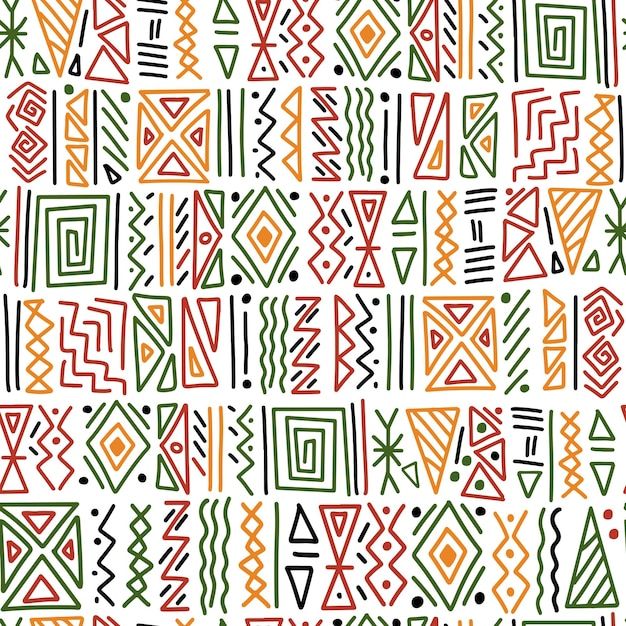
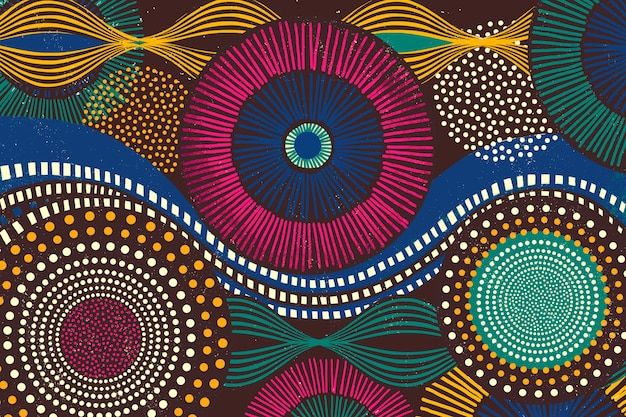
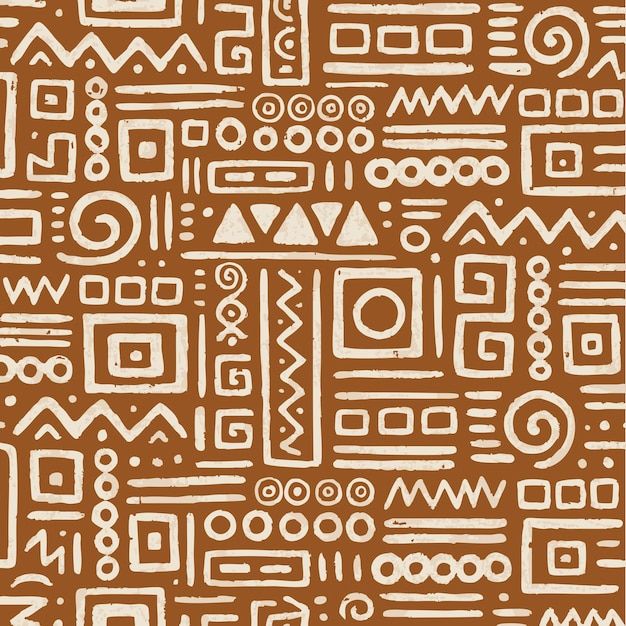
Highly varied by region and tradition. Kente cloth features interlocking geometric colour blocks in bold combinations. Kuba cloth uses interlocking geometric relief patterns cut and sewn into raffia. Mudcloth (bogolanfini) uses earthy brown and black grounds with bold geometric and symbolic marks. Adinkra symbols are compact stamped repeating motifs with encoded meaning. African wax print features large-scale, symmetrical designs in high-contrast colourways - often with characteristic offset registration. Zulu, Xhosa, and Ndebele beadwork uses dense geometric banding in strong colour sequences.
Kente stripweaving produces modular stripe-and-block structures assembled from narrow woven strips - the final cloth is a patchwork of individually woven units. Mudcloth uses irregular hand-applied marks over plain cloth, with no rigid repeat structure. Adinkra printing produces all-over repeating stamped motifs using carved calabash stamps. African wax prints are bilateral mirror-repeat designs, typically large in scale - the offset registration (where the two sides of the print don't perfectly align) is a signature characteristic of the wax resist process. Ndebele beadwork and geometric painting produces structured banded rows of geometric units.
Kente traditionally uses gold, green, red, and black in interlocking blocks. Mudcloth uses raw cotton grounds with ochre, fermented mud browns, and black. African wax print is characterised by vivid, high-saturation colourways - often red, yellow, green, blue, and black - with high contrast between ground and motif. Adinkra printing is typically done in black on plain or naturally dyed cloth. Beadwork uses saturated primary and secondary colour sequences.
African textile traditions predate European colonialism and in many cases maintain continuous practice today. Kente cloth originates with the Akan people of Ghana and Ivory Coast, woven on horizontal strip looms (documented at least 17th century). Kuba raffia cloth is associated with the Kuba Kingdom of present-day DRC. Bogolanfini (mudcloth) comes from Mali - cloth is soaked in fermented pond mud applied to pre-mordanted fabric, producing characteristic dark tones through a multi-stage process. Adinkra printing uses carved calabash stamps and is associated with Asante culture. African wax print fabric - widely used across sub-Saharan fashion - was originally developed in the Netherlands (Vlisco) and Indonesia via colonial trade routes, later adopted and culturally transformed across West and Central Africa. Faso Dan Fani (Burkina Faso) is a handwoven striped cloth used in national identity contexts. Cloth across many African cultures historically functioned as historical record, political symbol, status marker, and social communication.
African pattern does not represent a single style but a range of distinct regional traditions distinguished by construction methods, symbolic vocabularies, and cultural contexts.
Highly varied by region and tradition. Kente cloth features interlocking geometric colour blocks in bold combinations. Kuba cloth uses interlocking geometric relief patterns cut and sewn into raffia. Mudcloth (bogolanfini) uses earthy brown and black grounds with bold geometric and symbolic marks.
Heritage
Kente stripweaving produces modular stripe-and-block structures assembled from narrow woven strips - the final cloth is a patchwork of individually woven units. Mudcloth uses irregular hand-applied marks over plain cloth, with no rigid repeat structure.
Adinkra symbols (coded Akan proverbs and cultural concepts) Kente geometric blocks (each named and culturally meaningful) Kuba interlocking geometric meander Mudcloth abstract symbolic forms Bold florals and oversized geometric shapes in African wax print Zigzag, chevron, and stripe banding in beadwork traditions
Kente traditionally uses gold, green, red, and black in interlocking blocks. Mudcloth uses raw cotton grounds with ochre, fermented mud browns, and black. African wax print is characterised by vivid, high-saturation colourways - often red, yellow, green, blue, and black - with high contrast between ground and motif.
African textile traditions predate European colonialism and in many cases maintain continuous practice today. Kente cloth originates with the Akan people of Ghana and Ivory Coast, woven on horizontal strip looms (documented at least 17th century).
Batik Pattern, Geometric Pattern, and Stripe Pattern