We use cookies to improve your experience and understand how PatternDesigners is used.
Types of Pattern | Surface Pattern Design Glossary
TYPES
Types of Pattern.
Discover pattern styles, motifs & structures used throughout surface pattern design, with visual examples to help you recognise every pattern type.
Types
Abstract Pattern
14
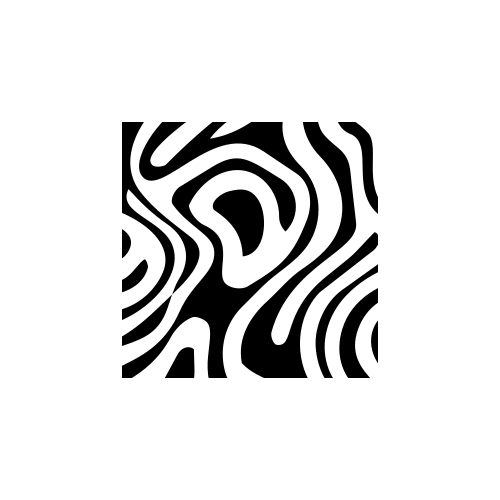
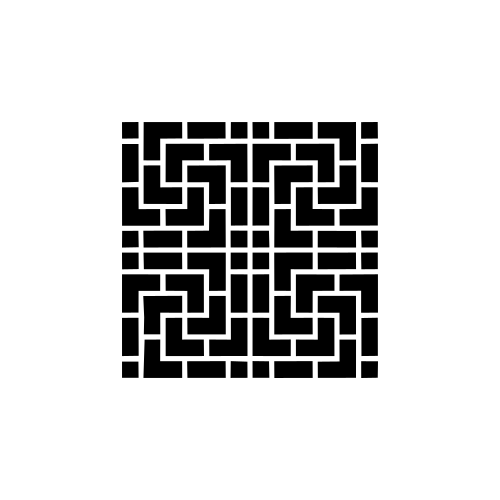
Abstract pattern spans from rigorous geometric systems to spontaneous painterly marks. In surface pattern design, it is one of the broadest commercially active categories, encompassing geometric abstraction, lyrical/painterly abstraction, op art, colour field, and hard-edge minimalism. Because abstract pattern carries no cultural or representational specificity, it is among the most broadly licensable pattern types across markets.
African Pattern
5
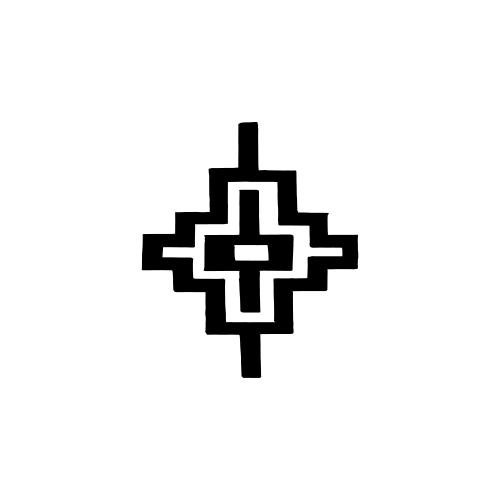
African pattern does not represent a single style but a range of distinct regional traditions distinguished by construction methods, symbolic vocabularies, and cultural contexts. These traditions have had significant global influence on surface pattern design, particularly in geometric pattern, bold colour use, and symbolic motif design. Key commercial derivatives - especially African wax print - are among the most widely recognised print aesthetics in global fashion.
Animal Pattern
4
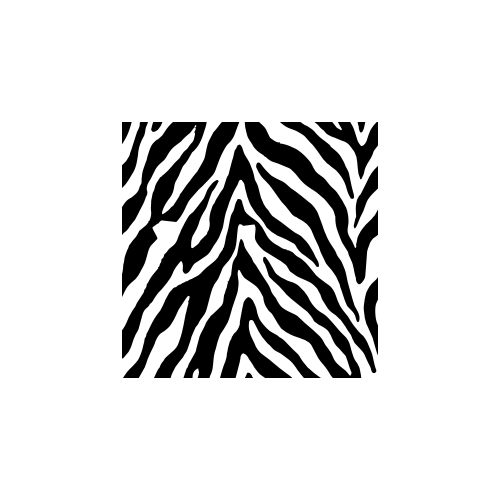
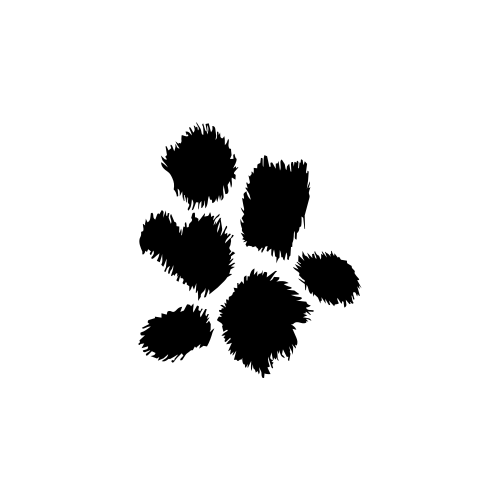
Animal print is one of the most commercially durable print categories in fashion and interiors. The category carries consistent associations of luxury, wildness, and status. Leopard and cheetah prints are the most commercially active; zebra and tiger follow closely. The pattern cycles between trend status and perennial commercial category - it reliably resurfaces in fashion and interior design across market cycles.
Apple Pattern
3
The apple pattern is a motif-driven repeat design using apple forms alongside leaves and blossoms. It sits within the broader Botanical Pattern and fruit motif categories, adaptable from naive folk illustration to detailed watercolour rendering. The motif has domestic and seasonal associations - autumn, harvest, orchard - that anchor it in home textiles, kitchen contexts, and children's design markets.
Arabesque Pattern
0
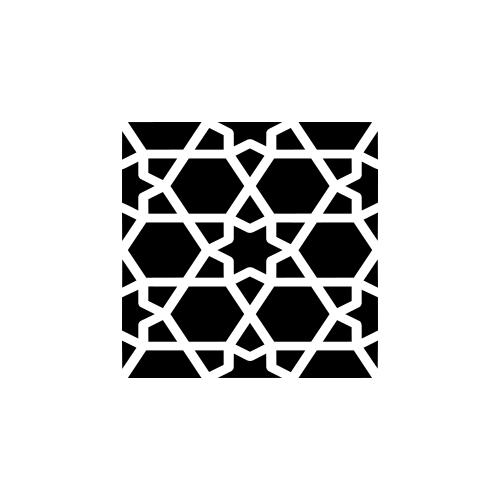
Arabesque is among the most historically significant and technically sophisticated surface pattern traditions in world design history. Its defining properties - continuous interlacing scrollwork, organic branching structure, and infinite repeatability - make it distinctively suited to all-over surface application. The pattern appears across textiles, tile, metalwork, manuscript illumination, architectural decoration, and wallpaper, and remains commercially active in luxury interiors and premium textile markets.
Argyle Pattern
0
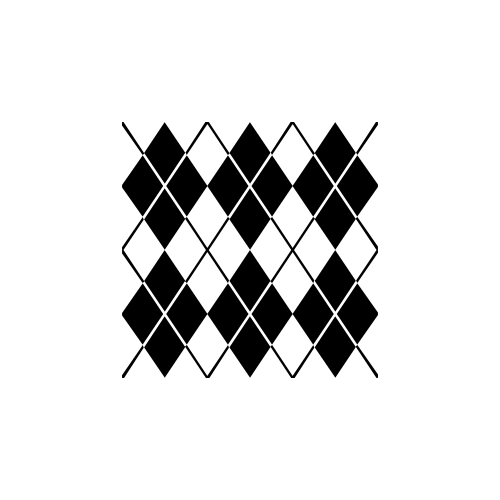
Argyle is one of the most commercially durable geometric patterns in British textile design. It is foundational to sock, jumper, and golf knitwear, and cycles regularly through fashion and sports apparel. The pattern has strong heritage associations - Scotland, golf culture, preppy dress - but adapts readily to contemporary colourways and scaled-up fashion interpretations.
Army Pattern
2
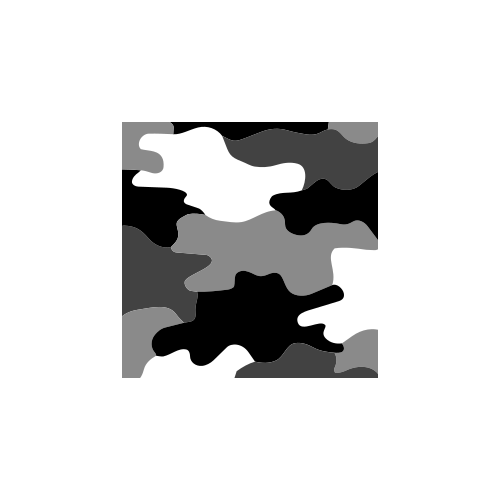
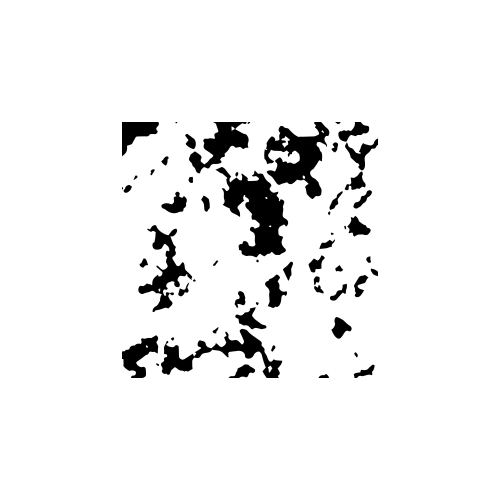
Army pattern (camouflage) originated as a military concealment technology and has become one of the most commercially active print categories in streetwear, fashion, and licensed product design. The pattern carries persistent cultural associations with military identity, subcultural rebellion, and anti-establishment positioning. It cycles reliably through mainstream fashion while maintaining a permanent baseline presence in workwear, sportswear, and streetwear.
Art Deco Pattern
1
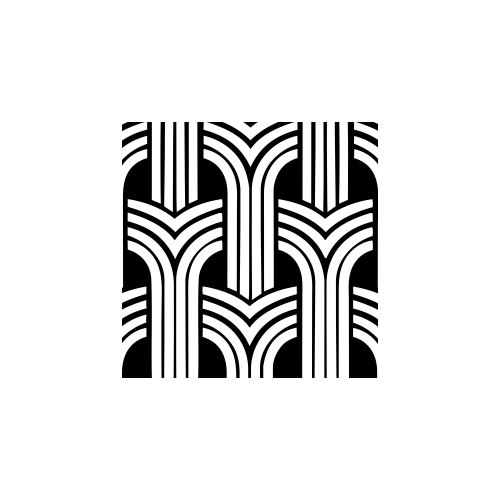
Art Deco is one of the most commercially significant historical styles in surface pattern design. Its geometric vocabulary, metallic sensibility, and associations with glamour and modernity make it a perennial category across fashion, interiors, wallpaper, and licensing. The style emerged from a collision of geometric abstraction, exotic ornamental traditions, and a deliberate celebration of contemporary materials and industrial production. It remains among the most recognisable and commercially active historical design movements.
Art Nouveau Pattern
1
Art Nouveau was a complete design movement spanning architecture, furniture, glass, ceramics, jewellery, textiles, and graphic arts. In surface pattern design, it is a foundational historical style with persistent commercial relevance - particularly in premium textiles, wallpaper, and licensing. Its botanical vocabulary, linear elegance, and association with the Belle Époque carry strong heritage value across luxury, interiors, and editorial markets. The style experienced significant revival in the 1960s and has remained commercially active since.

Astrology Pattern
1
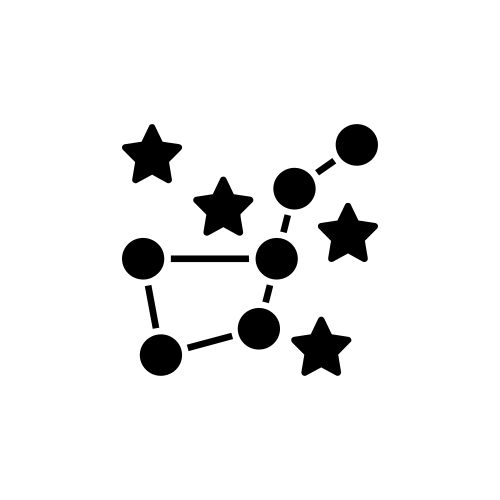
Astrology pattern draws on the graphic language astrology uses to represent relationships between celestial bodies: symbolic glyphs for planetary "aspects" (angles between planets in a horoscope), the twelve zodiac signs grouped into four elemental sets, and - notably for surface pattern - the fact that many of these aspect angles correspond directly to regular star polygons (pentagram, heptagram, octagram, decagram, dodecagram, and more). The source is an astrology reference on aspect theory rather than a design source, so this page focuses on the visual/symbolic vocabulary it documents.
Asymmetry Pattern
4
Asymmetry in surface pattern design refers to the deliberate avoidance of symmetrical arrangement. Rather than cancelling visual energy, an asymmetric pattern harnesses contrast, uneven spacing, and varied visual weights to create compositions that feel dynamic and engaging. It is a structural choice rather than a specific pattern style, applicable across a wide range of motif types and aesthetics.
Banana Pattern
0
The banana pattern groups banana fruit forms with associated tropical foliage - the large, arch-shaped banana leaf being a distinctive graphic element in its own right. It sits alongside pineapple and monstera patterns within the resort and summer market aesthetic. Both fruit and leaf motifs translate well into bold, graphic repeat structures at various scales.
Basket Weave Pattern
0
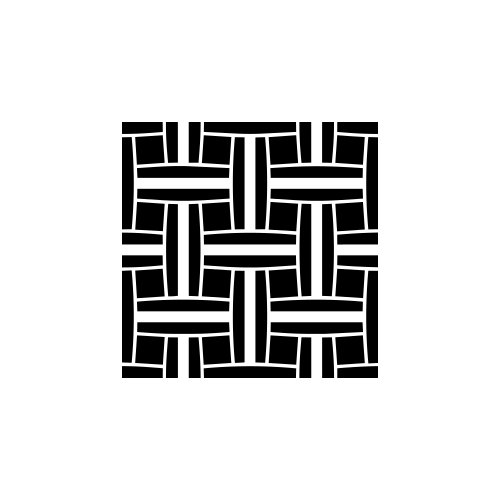
Basket weave is one of the simplest variations of plain weave, distinguished by the grouping of threads rather than single-thread interlacing. In surface pattern design it appears both as an actual woven cloth construction and as a printed pattern that simulates the woven grid structure. Its clean geometric surface, subtle texture, and structural clarity make it commercially useful across apparel, interiors, and background surface design.
Batik Pattern
0
Batik is both a technique and a pattern aesthetic. The wax-resist process produces a distinctive line quality and surface character - particularly the organic crackle lines where wax fractures during dyeing - that distinguishes batik from printed textiles. Indonesian batik was inscribed on the UNESCO Intangible Cultural Heritage list in 2009. As a surface pattern aesthetic, batik-inspired design is commercially active in fashion, home textiles, licensing, and print-on-demand markets.
Bee Pattern
0
Bee patterns span two distinct visual registers: the figurative bee motif (stylized or detailed insects) and the structural honeycomb grid (hexagonal geometry abstracted from comb construction). Both forms are commercially active, often combined in the same repeat. The bee carries strong symbolic associations - community, hard work, nature, sustainability - that give the pattern appeal for eco-positioned brands and artisan lifestyle markets.
Black Pattern
0
In surface pattern design, black functions as both background and foreground - an anchor tone that intensifies other colours and lends authority, formality, and graphic weight to a composition. Black-dominant patterns span high fashion, luxury interiors, stationery, and accessories, where the colour signals sophistication, elegance, and contrast. It is commercially versatile: equally at home in minimalist modernist prints and in richly decorative dark-ground florals or toiles.
Blue Pattern
0
Blue is among the most commercially important colours in surface pattern design. It carries strong associations with calmness, trust, and reliability, making it broadly acceptable across consumer markets. The blue-and-white pattern tradition - rooted in Islamic and Chinese ceramics and transmitted through Delftware, Blue Willow transferware, and Toile de Jouy - is one of the most persistent and commercially active motif families in home decor, tableware, and textile design. Monochromatic blue schemes remain commercially reliable across fashion, interiors, and licensing.
Bohemian Pattern
1
Bohemian pattern is defined by its source diversity - drawing simultaneously from Moroccan tilework, Indian block-print traditions, African mudcloth geometry, Native American and Southwestern weavings, and Eastern European folk embroidery. The unifying quality is not any single motif but palette discipline and a hand-made visual register. Home textiles represent the largest commercial market; mandala patterns form the most commercially active subcategory.
Botanical Pattern
0
Botanical pattern draws a direct line from the historical practice of botanical illustration into surface pattern design. Where tropical pattern pursues bold, exotic, large-scale immediacy, botanical pattern emphasises careful observation, plant specificity, and illustrative accuracy. Watercolour is the primary medium. Applications span fashion, home textiles, wallpaper, and stationery, with strong heritage positioning in the British and European markets.
Brickwork Pattern
0
Brickwork pattern translates architectural masonry structure into a printed or woven surface design. In surface pattern design it functions primarily as a texture or background element, used to add structural visual interest without figurative content. The pattern appears across interiors, stationery, and fashion as a reference to urban, industrial, and heritage architectural aesthetics. It is commercially active in home decor wallpaper, printed textiles, and lifestyle products.
Bullseye Pattern
0
The bullseye is one of the simplest geometric pattern structures: a filled central circle surrounded by successive alternating rings. The result is a form with perfect radial symmetry that, under certain colour conditions, creates strong optical illusions - depth, pulsation, or apparent movement. Commercially positioned within the graphic, bold, and Op Art aesthetic registers.
Butterfly Pattern
0
Butterfly pattern has a long history in both fine decorative arts and commercial surface design. As a motif, the butterfly offers symmetry, colour complexity, wing-surface variation, and symbolic richness - making it commercially active across luxury fashion, interior wallpaper, scarves, upholstery, and licensing. The historical trajectory of butterfly pattern runs from scientific illustration (E.A. Seguy, 1925) through haute couture (Schiaparelli, McQueen) to contemporary wallpaper and textiles. Moths are frequently treated as aesthetic extensions of butterfly pattern, with their own design vocabulary.
Calico Pattern
0
Calico's pattern identity is primarily an American definition: small-scale all-over florals or geometric motifs on cotton. In the UK, Australia, and New Zealand, "calico" refers to the unbleached unprinted plain-weave fabric itself. In surface pattern design, the American usage is operative - a dense, small-scale printed cotton with multiple tightly packed repeating motifs. The style anchors the quilting fabric, country-home, and folk-domestic markets.
Camouflage Pattern
0
Camouflage pattern entered surface pattern design from military application. In its civilian form it functions as a graphic aesthetic rather than a functional concealment system - the pattern carries connotations of military history, outdoor/utility culture, streetwear, and counter-cultural fashion. It is commercially active across casual apparel, accessories, homeware, and stationery, and has undergone repeated fashion revivals since the 1970s. The source confirms directly: "patterns derived from military camouflage are frequently used in fashion clothing."
Cat Pattern
0
Cat patterns operate on two levels in surface design: as a figurative motif (cats as characters, poses, or silhouettes) and as a reference to feline coat markings (stripes, spots, and tortoiseshell coloration systems). Feline coat pattern provides a rich, naturally occurring visual vocabulary that directly informs pattern design - particularly tabby stripe, tortoiseshell colour mixing, and calico tricolour arrangements. Domestically, cat-themed surface pattern is commercially active in gifting, stationery, home textiles, and children's products.
Celtic knot Pattern
0
Celtic knot pattern draws from a documented historical tradition rooted in the illuminated manuscripts, stone carvings, and metalwork of early medieval Ireland, Scotland, and Northumbria. In surface pattern design, the interlace vocabulary of Celtic knotwork functions as a heritage motif with strong commercial associations across Irish, Scottish, and wider British Isles cultural identity. It is particularly active in jewellery design, luxury textiles, stationery, and licensed heritage products. The endless knot - a strand with no visible beginning or end - carries symbolic weight as a motif of eternity and continuity.
Check Pattern
0
Check is a fundamental geometric structure in textiles and surface design. Its simplicity - a regular grid of alternating colour squares - makes it infinitely adaptable: the same underlying structure produces tartan, gingham, buffalo check, windowpane plaid, tattersall, and shepherd's check by varying scale, colour count, and line weight. Check patterns are commercially active across fashion, accessories, homeware, and stationery, carrying market associations ranging from rural/preppy (gingham, tattersall) through luxury heritage (Burberry, Louis Vuitton Damier) to streetwear and subculture references (ska music, keffiyeh).
Cheetah Pattern
0
Cheetah pattern occupies a specific position within the animal print category, differentiated from Leopard Pattern by its smaller, rounder, solid (unfilled) spots and lighter tawny ground colour. In fashion and surface design, cheetah print is commercially active alongside leopard as part of the broader animal print market, though it is less dominant commercially. Its lighter ground and more delicate spot structure give it a different visual character - less saturated and bolder than leopard, more refined and even-toned.
Chevron Pattern
0
A chevron is a V-shaped mark or symbol, often shown inverted (point down). Historically the term refers to a fret in architecture, a badge or insignia denoting military or police rank, and a heraldic ordinary - one of the simple geometric figures forming the basis of many coats of arms. As a surface pattern motif, the chevron's appeal lies in this same simple, high-contrast V-shape geometry, repeated to form a zigzag.
Chinoiserie Pattern
0
Chinoiserie is not a direct reproduction of Chinese art but a European fantasy of Chinese aesthetics, filtered through trade goods, diplomatic gifts, and imaginative interpretation. It emerged alongside European fascination with East Asian trade goods and was closely associated with the Rococo movement - sharing Rococo's appetite for exuberance, asymmetry, and decorative invention. In surface pattern design, chinoiserie is particularly active in wallpaper, ceramics, upholstery, and luxury interior textiles, where it carries associations with heritage, grandeur, and sophisticated eccentricity. The style has proven commercially durable from its 17th-century origins through to the present.
Christmas Pattern
0
Christmas pattern is one of the most commercially reliable seasonal pattern categories in surface design. The seasonal and gift-driven purchasing cycle creates consistent demand for Christmas pattern across wrapping paper, fabric, stationery, homeware, and holiday apparel - with new designs produced annually by retailers and pattern designers. The category is characterised by a stable core motif vocabulary with significant variation in style, from traditional and heritage treatments through to contemporary, minimal, and novelty approaches.
Circle Pattern
0
Circle pattern is a broad geometric category in surface design, encompassing everything from the commercial simplicity of the polka dot to the sacred geometry associations of the Flower of Life overlapping-circles grid. The circle as a design element is commercially universal - it appears in children's textiles, modernist fashion prints, home decor, jewellery, and stationery. The overlapping circles grid specifically carries documented use from ancient Assyrian decoration through Roman Empire architecture, Islamic geometric art, and Gothic stonework - giving it both deep historical roots and active contemporary market relevance.
Collage Pattern
0
Collage as a surface pattern approach is both a historical fine art lineage and a current digital workflow. In physical practice it involves cutting, tearing, and combining paper, photographs, fabric, or found material into a compositional surface. In digital design the same visual logic applies: layering scanned textures, photographs, hand-drawn elements, and type into a single assembled image. Both versions translate into repeating surface patterns with a characteristically layered, eclectic visual texture.
Concrete Pattern
0
Concrete pattern in surface design draws on the aesthetic of exposed concrete architecture - a visual language associated with Brutalism, modernism, urban environments, and industrial material honesty. As a texture reference, concrete provides a neutral, granular surface that functions as a background or structural element in surface design rather than as a decorative motif. Its commercial applications are primarily in interior materials (wallpaper, tile, printed flooring) and as a background texture in graphic design and stationery. The source available covers architectural and construction-focused concrete patterning rather than directly SPD-specific applications.
Contour Pattern
0
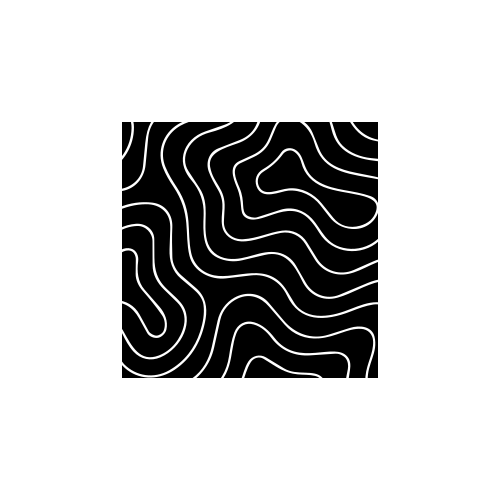
Contour patterns draw from two distinct visual traditions sharing the same vocabulary of lines: cartographic contour mapping (where curved parallel lines reveal terrain relief) and contour drawing in fine art (where line defines the mass and edges of a subject without shading). Both traditions translate into surface pattern design as linear compositions with a characteristic structural and depth-suggesting aesthetic.
Coral Pattern
0
Coral pattern encompasses two related but distinct directions. The first uses marine coral organisms as literal motifs - branching polyp forms, sea fans, and reef structures rendered as conversational or abstract surface patterns. The second uses coral as a dominant colour vocabulary: a warm pinkish-orange positioned between orange and pink, applied across botanical, geometric, abstract, and figurative motif categories. Both directions share tropical and coastal associations and are commercially grouped together in resort, swimwear, and lifestyle product contexts.
Crocodile Pattern
0
Crocodile pattern translates the distinctive surface geometry of crocodile hide into a repeating surface design. The pattern is defined by the irregular but systematic tiling of scute-like forms - the bony, horny scales that cover the crocodile's body - arranged in a continuous all-over texture. As a surface pattern type, it belongs to the broader category of reptile-print and animal-skin textures, which have enduring commercial relevance in luxury fashion.
Damask Pattern
1
Damask is simultaneously a weaving technique and a surface pattern aesthetic. As a woven fabric, it is defined by its structure: a warp-faced satin pattern woven against a weft-faced satin ground using the same thread set, producing a reversible fabric where the pattern appears on both sides but in inverse tone. As a pattern aesthetic, damask refers to the large-scale ornamental vocabulary - medallions, scrolls, florals, and architectural forms - that developed through this technique. In surface pattern design, damask motifs are reproduced by printing as well as weaving, and are commercially active in wallpaper, home textiles, and licensing across heritage, formal, and ironically-deployed contexts.
Designer Pattern
0
In the context of surface pattern design (textiles, wallpaper, packaging), a designer pattern is a continuous, seamless repeat applied to the surfaces of mass-manufactured products. The designer creates a base unit - the motif - and arranges it in a systematic grid or sequence so that the edges tile perfectly when repeated. The discipline's focus is how artwork scales, repeats, and reads across physical products and surfaces. The term "pattern design" also applies in other fields - garment pattern making (structural templates for cutting cloth) and software engineering (reusable architectural blueprints) - but in the surface pattern context, it refers specifically to the visual repeat design discipline.
Diagonal Stripes
0
Diagonal stripes are a foundational stripe variant defined by their angle rather than their colour, width, or spacing. The same striping logic as horizontal and vertical stripes applies - repeating parallel bands of colour - but oriented at a bias, typically 45°. The result is a visually dynamic pattern with an inherent sense of motion and visual flow. As a structure, diagonal stripes are highly versatile: width, colour density, and angle variation each produce substantially different aesthetic registers.
Diamond Pattern
0
Diamond pattern is a structural term in surface pattern design: it describes any composition in which the primary visual elements are aligned along 45° diagonal axes rather than horizontal and vertical ones. The diamond (rotated square) is among the most versatile geometric forms in surface design - equally present in architectural stonework, woven textiles, stained glass, playing cards, and fashion print. As a structural category it encompasses both the simple single-colour diamond grid and complex multicolour arrangements such as argyle, harlequin, and lozenge compositions.
Diaper Pattern
0
The diaper pattern is defined by the regular repetition of a simple geometric unit - typically a diamond or lozenge - spaced evenly to create an unbroken field across the fabric. The pattern belongs to the damask family of woven cloth but is distinguished by the small scale of its repeat unit and the simplicity of its geometric form. It has been a consistent presence in European and South Asian textile traditions for centuries, produced in silk, linen, and cotton across distinct cultural weaving practices.
Digital Pattern
0
The term "digital pattern" is used in two distinct industries with incompatible meanings. In apparel manufacturing, a "digital pattern" means a garment construction pattern (a 2D template for cutting fabric) produced using CAD software - this is the meaning addressed in the available source. In surface pattern design, "digital pattern" refers to the creation method: repeat patterns designed using software such as Adobe Illustrator, Photoshop, Procreate, or specialist pattern tools rather than by physical media. This page addresses the SPD meaning. Digital creation tools have become the dominant production method in surface pattern design. Most professional pattern designers now work digitally for some or all of their workflow - either creating artwork digitally from the start, or digitising hand-made artwork for repeat production. The rise of digital tools has expanded who can produce commercial surface pattern and has enabled print-on-demand platforms that allow individual designers to sell directly to print customers.
Dinosaur Pattern
0
Dinosaur pattern is a commercially reliable children's motif category with consistent market demand. Driven by the persistent cultural popularity of dinosaurs - sustained through museum exhibits, film franchises such as Jurassic Park, and children's media - the category provides surface pattern designers with a distinctive zoological subject that combines fantasy appeal with factual content. Dinosaur pattern is primarily positioned in children's markets but has expanded into adult and lifestyle applications through ironic, graphic, and nostalgic treatments.
Directional Pattern
0
A directional pattern is one where the motifs or compositional elements read correctly only from one or a limited set of angles. Rotating or inverting the fabric makes the pattern appear wrong - animals face downward, flowers hang upside down, text becomes unreadable. This property is intrinsic to many figurative, scenic, and novelty prints and has direct practical implications for fabric cutting, garment making, and quilt construction. Directionality is a structural classification rather than an aesthetic category: a pattern is either directional or it is not.
Dog Pattern
0
Dog pattern draws on one of the oldest and most widespread human-animal relationships. Dogs have been depicted in decorative arts across cultures and centuries - from prehistoric rock carvings and Greek ceramics through Renaissance portraiture and Victorian oil painting to contemporary character illustration. As a surface pattern motif, dog imagery carries strong associations with loyalty, companionship, and domestic life, making it commercially reliable across gifting, home textiles, and lifestyle products. The variety of dog breeds provides a visually rich design vocabulary - from the elegant silhouette of the greyhound through the square-headed bulldog to the fluffy outline of the samoyed.
Dragon Pattern
0
Dragon pattern in surface design is dominated by East Asian iconographic traditions - particularly the Chinese imperial dragon with its coiled body, five claws, and accompanying symbolic elements (flaming pearl, clouds, waves). This tradition connects to one of the most historically significant applications of surface pattern design: the ceremonial robes of Chinese, Korean, and Japanese imperial courts, in which dragon motifs were encoded symbols of rank and political authority. In contemporary surface design, dragon pattern carries associations with power, mythology, and Asian cultural heritage, and is commercially active across fashion, wallpaper, licensing, and gift products.
Emoji Pattern
0
Emoji pattern brings the visual vocabulary of digital communication into surface pattern design. The motifs are drawn directly from the standardised Unicode emoji library - the brightly coloured, flat-graphic pictograms used in text messaging and digital communication worldwide. As a pattern type, emoji prints belong to the conversational and novelty print category: they use immediately recognisable popular-culture imagery as the primary design element, prioritising cultural reference and emotional resonance over abstract or aesthetic composition.
Ethnic Pattern
0
"Ethnic pattern" is an industry-used umbrella term in surface pattern design for work that references the folk art, craft, and decorative traditions of specific nationalities or cultural groups. The Artlandia glossary defines it simply as: "Art typical of a specific nationality or a design based on folk art." In commercial practice the term covers a wide range of regionally specific traditions - ikat, kilim, kente, suzani, tribal, and folk-art motif collections are all sold and described under "ethnic pattern" labelling in the textile and licensing industry. The category is commercially active across fashion, home textiles, accessories, and stationery.
Fleur-de-lis Pattern
0
The fleur-de-lis is a symmetrical three-part form: a central upward-pointing petal flanked by two outward-curving petals, all bound at the base by a horizontal band or ring. As a surface pattern, it appears in seamless all-over repeats, formal damask compositions, trellis grids, and contemporary minimalist interpretations. Its heritage associations - French royalty, European heraldry, Christian iconography - give it a luxury and classical positioning that remains commercially active across wallpaper, home furnishings, and fashion.