Loading
NEW DESIGNERS ADDED WEEKLY!
The best pattern designers.
Browse & hire professional surface pattern designers for fashion, textiles, interiors & product design.
Browse & hire professional surface pattern designers for fashion, textiles, interiors & product design.
We use cookies to improve your experience and understand how PatternDesigners is used.
Discover pattern styles, motifs & structures used throughout surface pattern design, with visual examples to help you recognise every pattern type.

Argyle is one of the most commercially durable geometric patterns in British textile design. It is foundational to sock, jumper, and golf knitwear, and cycles regularly through fashion and sports apparel. The pattern has strong heritage associations - Scotland, golf culture, preppy dress - but adapts readily to contemporary colourways and scaled-up fashion interpretations.
Argyle is one of the most commercially durable geometric patterns in British textile design. It is foundational to sock, jumper, and golf knitwear, and cycles regularly through fashion and sports apparel. The pattern has strong heritage associations - Scotland, golf culture, preppy dress - but adapts readily to contemporary colourways and scaled-up fashion interpretations.
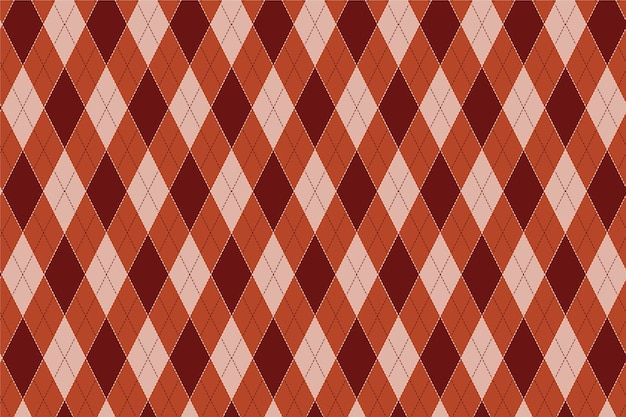
Argyle consists of overlapping diamond shapes in two or more colours arranged on a diagonal axis. A secondary diamond outline - typically a fine line in a contrasting colour - sits on top of the solid diamond grid, aligned to the crossing diagonals. The overlapping structure creates a visual impression of depth, making the pattern appear layered. In its classic three-colour form, argyle uses a ground colour, a contrasting solid diamond, and a fine diagonal line.
Argyle is a diagonal grid repeat. Diamonds are staggered so that adjacent columns offset by a half-unit, producing overlap rather than simple tiling. The intercrossing diagonal lines are a structural requirement - they distinguish argyle from a plain diamond check. The pattern differs from tartan in that it places two solid colours side by side rather than interlacing warp and weft colours in a woven structure. Pattern scale ranges from fine-gauge knitwear (small scale) to oversized contemporary printed versions.
Argyle has no figurative or illustrative motif content. It is a purely geometric construction of nested diamonds and diagonal lines. Design variation is achieved through scale, colour combination, and the proportion between diamond size and line weight.
Traditional argyle uses a heritage knitwear palette: bottle green, navy, burgundy, mustard, cream, and grey. Golf-influenced versions introduced brighter combinations in the 1920s and 1930s, associated with the Duke of Windsor. Contemporary interpretations appear in seasonal trend colourways and printed versions. The classic three-colour navy/forest green/cream combination retains strong heritage market presence.
Argyle derives from the tartan associated with Clan Campbell of Argyll, Scotland. Scottish Highland tartan hose featuring diagonal diamond structures date to at least the 17th century. The pattern transitioned from regional Highland dress into mainstream British menswear during the early 20th century. Pringle of Scotland - founded in Hawick in 1815 - popularised the argyle pattern internationally in the 1920s through its knitwear. The Duke of Windsor's public adoption of argyle knitwear cemented its association with golf culture and upper-class leisure dress. Traditional argyle knitwear is produced using intarsia knitting - separate yarn bobbins for each colour region, requiring significant technical skill. The pattern has moved through multiple cultural associations: preppy American collegiate style (1950s-60s), punk reinterpretation (1970s), and contemporary sportswear.
Argyle is one of the most commercially durable geometric patterns in British textile design. It is foundational to sock, jumper, and golf knitwear, and cycles regularly through fashion and sports apparel.
Argyle consists of overlapping diamond shapes in two or more colours arranged on a diagonal axis. A secondary diamond outline - typically a fine line in a contrasting colour - sits on top of the solid diamond grid, aligned to the crossing diagonals.
Geometric
Argyle is a diagonal grid repeat. Diamonds are staggered so that adjacent columns offset by a half-unit, producing overlap rather than simple tiling. The intercrossing diagonal lines are a structural requirement - they distinguish argyle from a plain diamond check.
Argyle has no figurative or illustrative motif content. It is a purely geometric construction of nested diamonds and diagonal lines. Design variation is achieved through scale, colour combination, and the proportion between diamond size and line weight.
Traditional argyle uses a heritage knitwear palette: bottle green, navy, burgundy, mustard, cream, and grey. Golf-influenced versions introduced brighter combinations in the 1920s and 1930s, associated with the Duke of Windsor. Contemporary interpretations appear in seasonal trend colourways and printed versions.
Argyle derives from the tartan associated with Clan Campbell of Argyll, Scotland. Scottish Highland tartan hose featuring diagonal diamond structures date to at least the 17th century. The pattern transitioned from regional Highland dress into mainstream British menswear during the early 20th century.
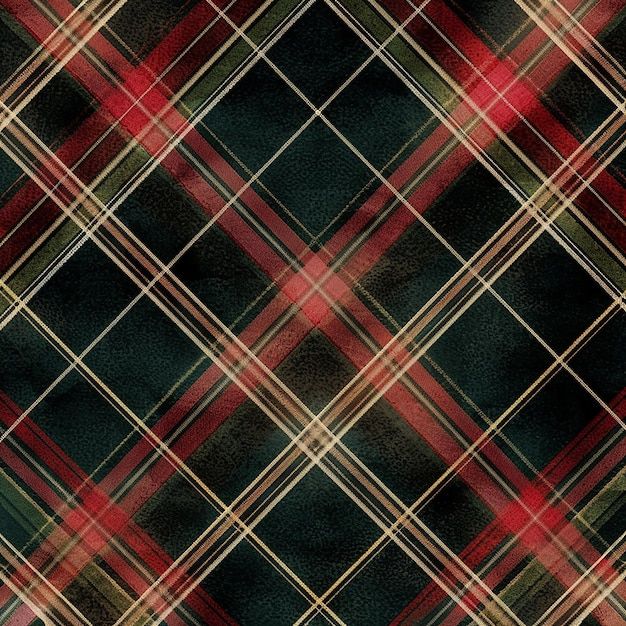
Tartan Pattern, Harlequin Pattern, Plaid Pattern, and Geometric Pattern