Loading
NEW DESIGNERS ADDED WEEKLY!
The best pattern designers.
Browse & hire professional surface pattern designers for fashion, textiles, interiors & product design.
Browse & hire professional surface pattern designers for fashion, textiles, interiors & product design.
We use cookies to improve your experience and understand how PatternDesigners is used.
Discover pattern styles, motifs & structures used throughout surface pattern design, with visual examples to help you recognise every pattern type.

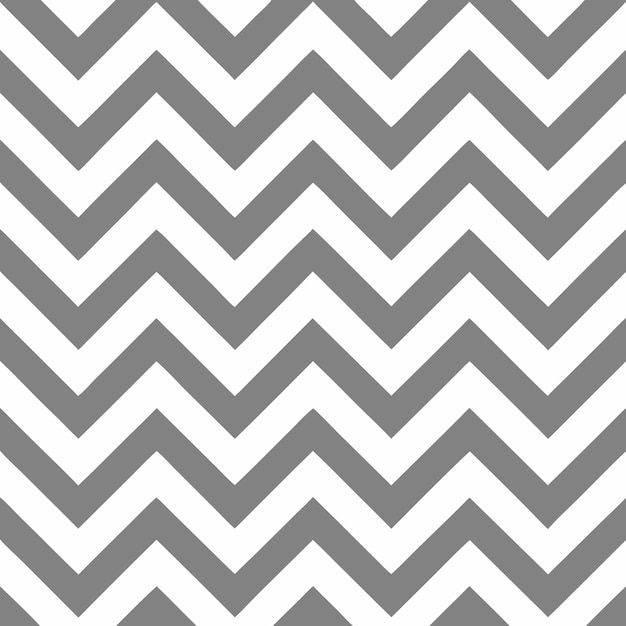
A chevron is a V-shaped mark or symbol, often shown inverted (point down). Historically the term refers to a fret in architecture, a badge or insignia denoting military or police rank, and a heraldic ordinary - one of the simple geometric figures forming the basis of many coats of arms. As a surface pattern motif, the chevron's appeal lies in this same simple, high-contrast V-shape geometry, repeated to form a zigzag.
A chevron is a V-shaped mark or symbol, often shown inverted (point down). Historically the term refers to a fret in architecture, a badge or insignia denoting military or police rank, and a heraldic ordinary - one of the simple geometric figures forming the basis of many coats of arms. As a surface pattern motif, the chevron's appeal lies in this same simple, high-contrast V-shape geometry, repeated to form a zigzag.
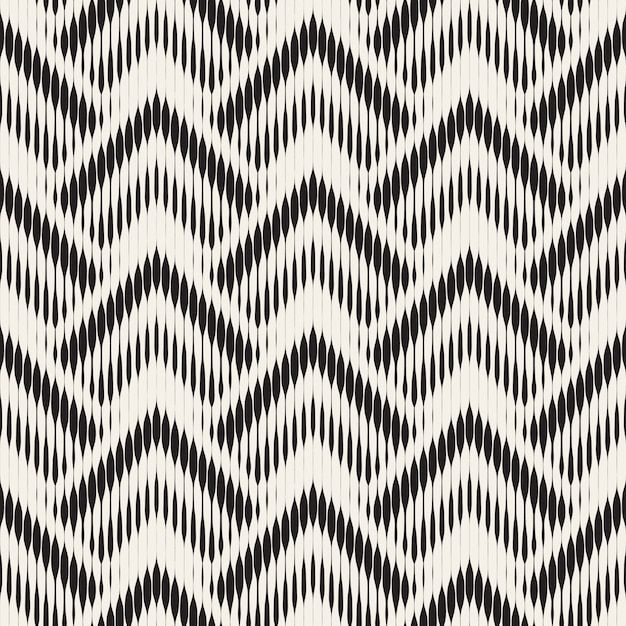
The chevron is fundamentally a symmetrical V (or inverted V) shape. In heraldry it is constructed at a deliberately chosen angle - the golden angle is cited as one option, though the artist may choose others - and can be modified in several ways: inverted (pointing down instead of up), wavy (curved rather than straight edges), éclaté (ends cut to look splintered, like broken wood, with an irregular zigzag), and chevronny (a field divided into multiple repeating chevron bands). A smaller-scale version is called a chevronel.
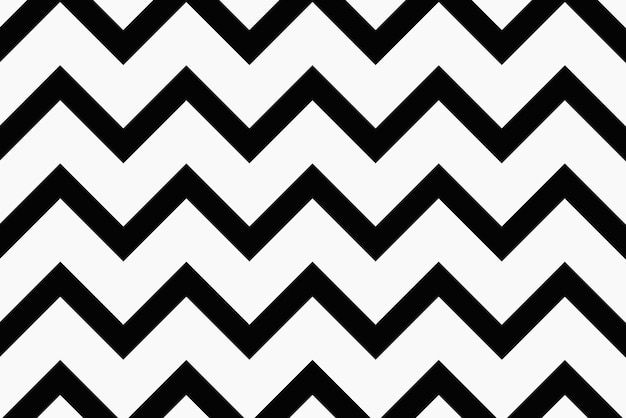
A single chevron is a discrete V-shaped mark; repeated and stacked, chevrons form a continuous zigzag band - the "chevronny" field division described in heraldry is effectively a repeat structure, dividing a surface into alternating bands using the chevron angle. Chevrons can also be arranged in interlaced pairs (a chevron and an inverted chevron overlapping) for a denser woven effect.
The source does not specify a colour palette for chevron pattern; heraldic examples shown use solid, high-contrast colour blocking (e.g. a single tincture chevron on a contrasting field), consistent with the motif's origin as a legible, high-contrast heraldic charge.
The chevron is described as one of the oldest symbols in human history, with V-shaped markings appearing as early as the Neolithic era (6th-5th millennia BC) as part of the Vinča symbol system, then used as part of a proto-writing system rather than for decoration. Later, chevron motifs appear in pottery designs recovered from the palace of Knossos on Crete (from roughly 1800 BC onward), and in the decorative geometric pottery repertoire of the Nubian Kingdom of Kerma. In heraldry, chevrons appeared early, especially in Normandy, and are known in Scandinavia as sparre. From the 18th century, the chevron was adopted as a military insignia - originally denoting general officer rank in the British Army (derived from Household Cavalry cuff and sleeve trim), before becoming the standard worldwide insignia for non-commissioned officer and sub-officer ranks.
The source documents the chevron primarily as a decorative element in ancient pottery, a heraldic charge, and a rank/insignia device (military, police, and vexillological/flag use) - it does not address textile, fashion, or interior surface pattern application specifically. Its earliest documented decorative use is as a geometric motif in ancient pottery design (Knossos, Kingdom of Kerma), which is the closest link in the source to ornamental/surface design rather than symbolic or heraldic use.
A chevron is a V-shaped mark or symbol, often shown inverted (point down). Historically the term refers to a fret in architecture, a badge or insignia denoting military or police rank, and a heraldic ordinary - one of the simple geometric figures forming the basis of many coats of arms.
The chevron is fundamentally a symmetrical V (or inverted V) shape.
The source documents the chevron primarily as a decorative element in ancient pottery, a heraldic charge, and a rank/insignia device (military, police, and vexillological/flag use) - it does not address textile, fashion, or interior surface pattern application specifically.
A single chevron is a discrete V-shaped mark; repeated and stacked, chevrons form a continuous zigzag band - the "chevronny" field division described in heraldry is effectively a repeat structure, dividing a surface into alternating bands using the chevron angle.
Single V-shaped chevron (point up or point down/inverted) Chevronny (repeating banded chevron field) Chevron wavy (curved-edge variant) Interlaced chevron and chevron-inverted pairs Éclaté chevron (splintered, irregular zigzag edge)
g. a single tincture chevron on a contrasting field), consistent with the motif's origin as a legible, high-contrast heraldic charge.
The chevron is described as one of the oldest symbols in human history, with V-shaped markings appearing as early as the Neolithic era (6th-5th millennia BC) as part of the Vinča symbol system, then used as part of a proto-writing system rather than for decoration.
Stripe Pattern, Diamond Pattern, and Tessellation Pattern