Loading
NEW DESIGNERS ADDED WEEKLY!
The best pattern designers.
Browse & hire professional surface pattern designers for fashion, textiles, interiors & product design.
Browse & hire professional surface pattern designers for fashion, textiles, interiors & product design.
We use cookies to improve your experience and understand how PatternDesigners is used.
Discover pattern styles, motifs & structures used throughout surface pattern design, with visual examples to help you recognise every pattern type.

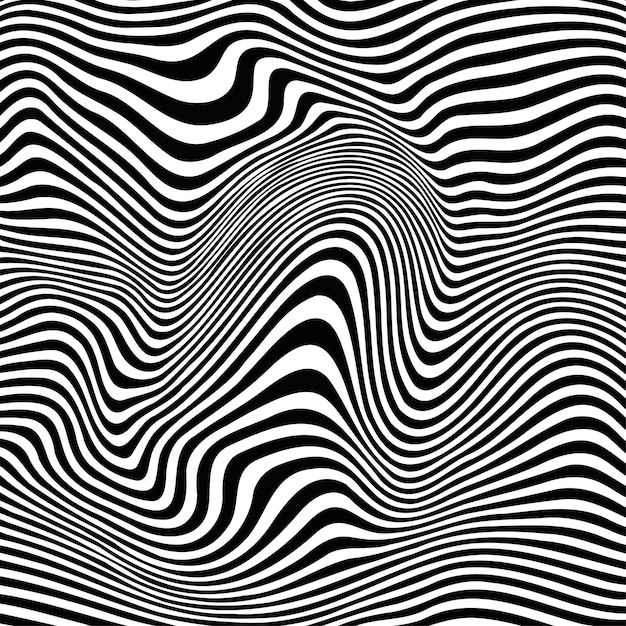
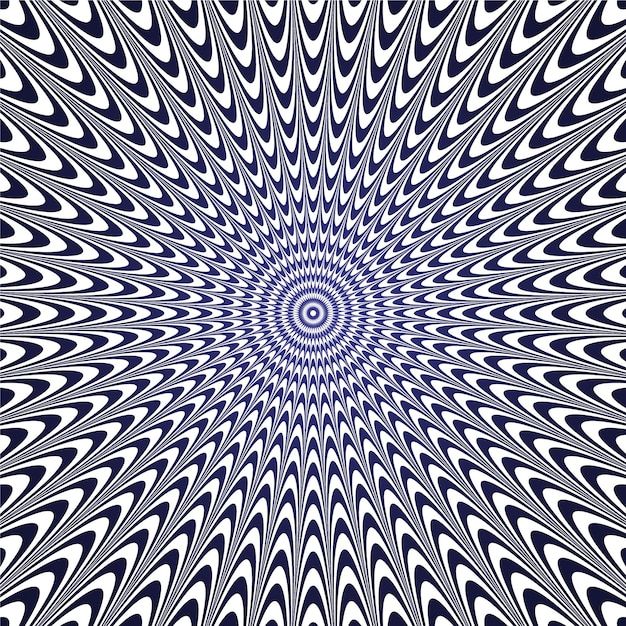
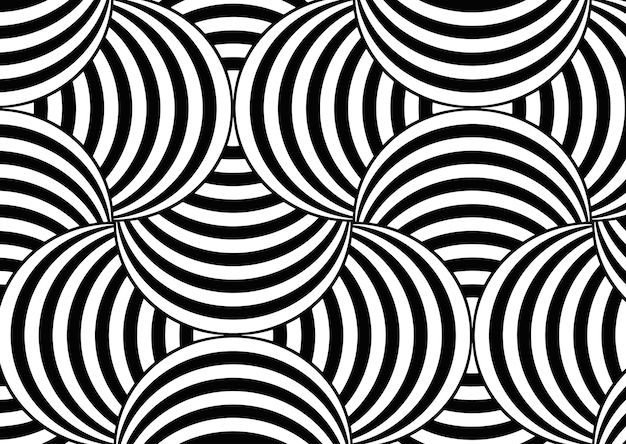
Illusion patterns exploit the perceptual mechanisms of human vision. By carefully arranging shapes, contrasts, and line orientations, a designer can make a flat 2D surface appear three-dimensional, appear to be in motion, or appear to contain spatial depth. The technique is distinct from representational trompe l'oeil (painted imitation of objects) in that illusion patterns typically use abstract geometric forms rather than pictorial imagery. The commercial territory covers a range from bold Op Art-influenced fashion prints to subtle structural depth effects in wallpaper and interior textiles. The key technical elements are: strong tonal contrast (often black and white), precise geometric structure, and controlled spatial organisation.
Illusion patterns exploit the perceptual mechanisms of human vision. By carefully arranging shapes, contrasts, and line orientations, a designer can make a flat 2D surface appear three-dimensional, appear to be in motion, or appear to contain spatial depth. The technique is distinct from representational trompe l'oeil (painted imitation of objects) in that illusion patterns typically use abstract geometric forms rather than pictorial imagery.
The commercial territory covers a range from bold Op Art-influenced fashion prints to subtle structural depth effects in wallpaper and interior textiles. The key technical elements are: strong tonal contrast (often black and white), precise geometric structure, and controlled spatial organisation.
Illusion patterns typically share several visual properties:
Well-known illusion effects used in pattern design include the Café Wall Illusion (parallel lines appearing sloped due to offset checker rows), peripheral drift illusion (colour gradients creating a sense of rotation), and figure-ground reversal (positive and negative shapes exchanging dominance).
Illusion patterns require structural precision and are typically created using vector tools or dedicated geometric construction. Common structural approaches:
Black and white is the primary palette for maximum contrast and strongest illusion effect. Monochrome (all tones of a single hue) also works effectively. Two-colour complementary pairs (red/cyan, blue/yellow, green/magenta) can create chromatic vibration effects beyond what achromatic contrast achieves.
In commercial fashion applications, illusion patterns are often adapted with chromatic palettes - a wavy stripe repeat in navy and cream, or a concentric circle print in earth tones - retaining the structural distortion while fitting seasonal colour requirements.
Op Art (Optical Art) emerged as a fine art movement in the 1960s, with Bridget Riley and Victor Vasarely among its leading practitioners. The movement demonstrated that purely geometric abstract painting could create powerful perceptual effects, and its visual vocabulary was rapidly adopted in fashion and textile design during the same decade.
The scientific basis for illusion patterns lies in the Gestalt principles of visual perception and the neuroscience of how the visual cortex processes contrast, colour, and motion signals. Specific illusions - such as the Peripheral Drift Illusion (PDI), studied by Faubert and Herbert (1999) and Conway et al. (2005) - exploit temporal differences in luminance processing.
Professor Akiyoshi Kitaoka's Rotating Snakes (2003) is one of the most reproduced optical illusion patterns; its banded colour spiral produces apparent rotational movement through peripheral vision activation. It has been widely referenced in surface pattern and design contexts.
Illusion patterns exploit the perceptual mechanisms of human vision. By carefully arranging shapes, contrasts, and line orientations, a designer can make a flat 2D surface appear three-dimensional, appear to be in motion, or appear to contain spatial depth.
Geometric
Illusion patterns require structural precision and are typically created using vector tools or dedicated geometric construction.
Abstract
Black and white is the primary palette for maximum contrast and strongest illusion effect. Monochrome (all tones of a single hue) also works effectively. Two-colour complementary pairs (red/cyan, blue/yellow, green/magenta) can create chromatic vibration effects beyond what achromatic contrast achieves.
Op Art (Optical Art) emerged as a fine art movement in the 1960s, with Bridget Riley and Victor Vasarely among its leading practitioners.