Loading
NEW DESIGNERS ADDED WEEKLY!
The best pattern designers.
Browse & hire professional surface pattern designers for fashion, textiles, interiors & product design.
Browse & hire professional surface pattern designers for fashion, textiles, interiors & product design.
We use cookies to improve your experience and understand how PatternDesigners is used.
Discover pattern styles, motifs & structures used throughout surface pattern design, with visual examples to help you recognise every pattern type.

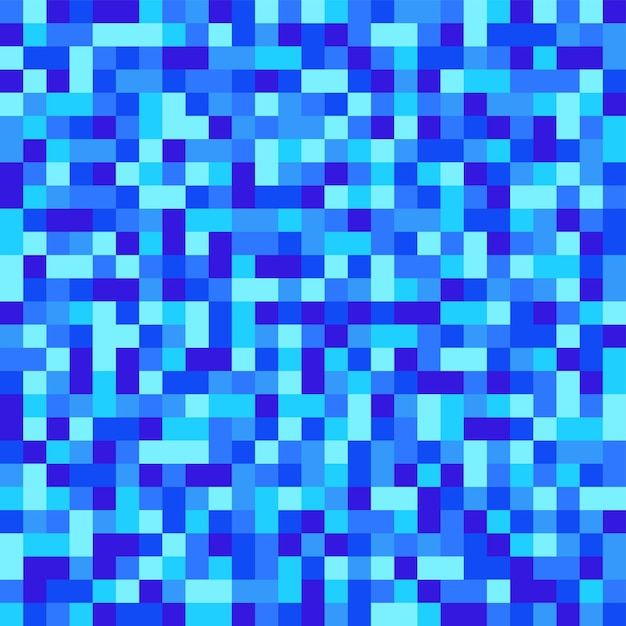
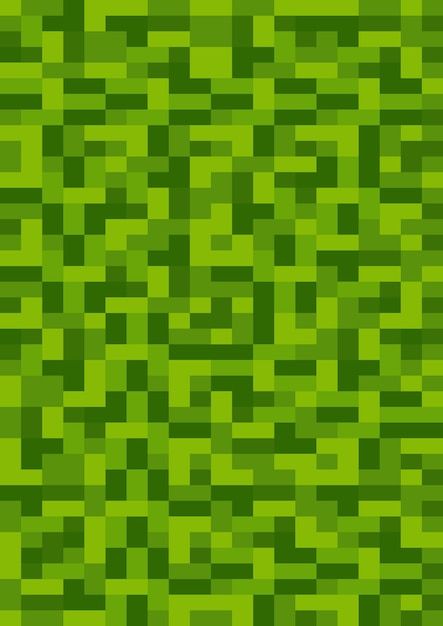
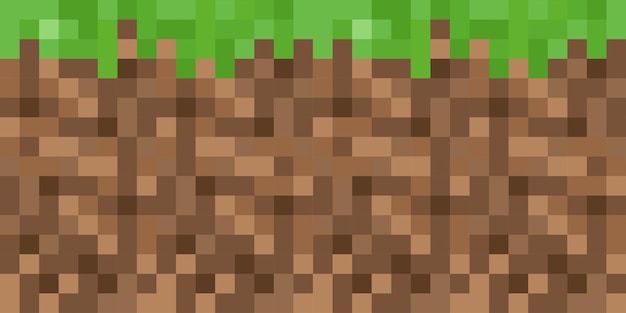
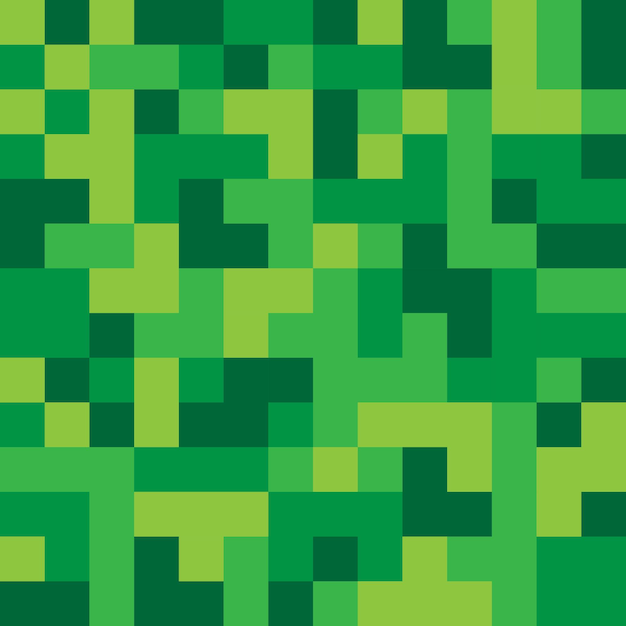
Minecraft pattern draws its visual identity from the game's core building unit, the "block" - a 1-cubic-metre cell arranged in a three-dimensional grid, with each face rendered from a small square texture. This gives the motif category a distinctive, instantly recognisable look: hard-edged cubes and a visible low-resolution pixel grain, rather than smooth or painterly surfaces. The source is a game-reference article on block mechanics rather than a design source, so this page draws only on the visual/structural facts it documents.
Minecraft pattern draws its visual identity from the game's core building unit, the "block" - a 1-cubic-metre cell arranged in a three-dimensional grid, with each face rendered from a small square texture. This gives the motif category a distinctive, instantly recognisable look: hard-edged cubes and a visible low-resolution pixel grain, rather than smooth or painterly surfaces. The source is a game-reference article on block mechanics rather than a design source, so this page draws only on the visual/structural facts it documents.
The defining visual trait is the cube: blocks occupy uniform 1-metre grid cells (with some partial exceptions such as slabs, stairs, and snow layers), giving the world - and by extension the motif - a hard-edged, orthogonal, "voxel" character. Block surfaces are textured with 16×16-pixel images, which produces a coarse, visibly pixelated surface quality distinct from smooth digital rendering. Some blocks (such as logs) use different textures on different faces, adding directional variation to an otherwise uniform cube.
The source describes a 3-dimensional cubic grid (blocks stacked edge-to-edge in all directions) as the fundamental structural system, mathematically equivalent to a cubic honeycomb tessellation. As a two-dimensional surface pattern, this translates most directly to a grid/block repeat, with square or cube-faced units tiled edge-to-edge - the pixel-grid texture itself can also be read as an all-over micro-repeat.
The source does not describe a colour palette for Minecraft pattern as a decorative style. It does note that textures control "all colors and transparencies" of a block face, and that some blocks are opaque while others (such as glass and flowers) are transparent or non-solid - a useful structural distinction (solid vs. see-through units) but not a stated palette.
The source does not provide a history of Minecraft's block system or of Minecraft-derived imagery as a design or textile motif; it documents current game mechanics (block behaviour, height, and texture resolution) rather than origin or design history.
Not documented in the source. The reference material is a gameplay/mechanics wiki page and contains no textile, apparel, wallpaper, or stationery application information.
Minecraft pattern draws its visual identity from the game's core building unit, the "block" - a 1-cubic-metre cell arranged in a three-dimensional grid, with each face rendered from a small square texture.
The defining visual trait is the cube: blocks occupy uniform 1-metre grid cells (with some partial exceptions such as slabs, stairs, and snow layers), giving the world - and by extension the motif - a hard-edged, orthogonal, "voxel" character.
Not documented in the source. The reference material is a gameplay/mechanics wiki page and contains no textile, apparel, wallpaper, or stationery application information.
The source describes a 3-dimensional cubic grid (blocks stacked edge-to-edge in all directions) as the fundamental structural system, mathematically equivalent to a cubic honeycomb tessellation.
Geometric
The source does not describe a colour palette for Minecraft pattern as a decorative style.
The source does not provide a history of Minecraft's block system or of Minecraft-derived imagery as a design or textile motif; it documents current game mechanics (block behaviour, height, and texture resolution) rather than origin or design history.
Check Pattern and Brickwork Pattern