Loading
NEW DESIGNERS ADDED WEEKLY!
The best pattern designers.
Browse & hire professional surface pattern designers for fashion, textiles, interiors & product design.
Browse & hire professional surface pattern designers for fashion, textiles, interiors & product design.
We use cookies to improve your experience and understand how PatternDesigners is used.
Discover pattern styles, motifs & structures used throughout surface pattern design, with visual examples to help you recognise every pattern type.

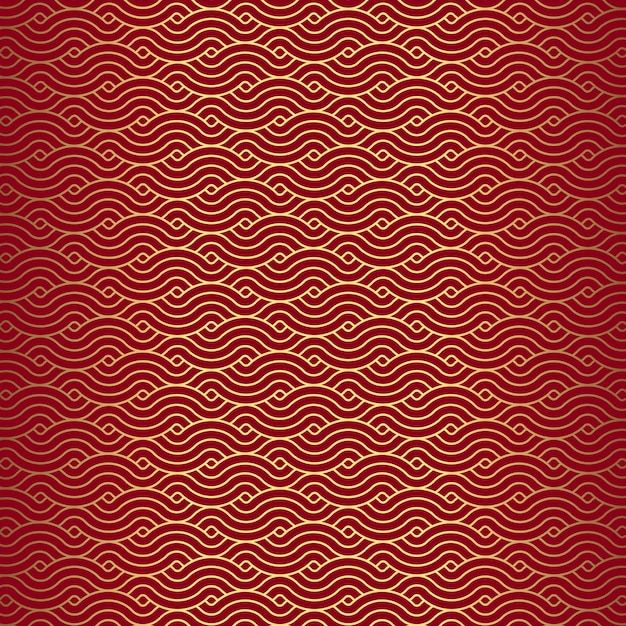
"Oriental pattern" is an industry umbrella term rather than a precise technical category. In commercial contexts it typically refers to patterns drawing on the visual vocabulary of oriental carpets (Turkish, Persian, Caucasian, Central Asian, and Chinese), on Chinese and Japanese decorative motifs, or on the broader Orientalist aesthetic that shaped European design from the 16th century onwards. The term encompasses designs of considerable complexity and cultural depth - from the strict geometric traditions of Anatolian Seljuq carpet design (13th century) through the floral elaboration of Safavid Persian court carpet to the chinoiserie-influenced surface patterns of 18th-century European textiles. In contemporary commercial use, it typically signals formal, richly decorated, tradition-referencing pattern design. Note on terminology: "Oriental" as a descriptor has been contested in some cultural and academic contexts; "Islamic", "Persian", "Anatolian", "Central Asian", or specific regional names are often more precise when attribution is known.
"Oriental pattern" is an industry umbrella term rather than a precise technical category. In commercial contexts it typically refers to patterns drawing on the visual vocabulary of oriental carpets (Turkish, Persian, Caucasian, Central Asian, and Chinese), on Chinese and Japanese decorative motifs, or on the broader Orientalist aesthetic that shaped European design from the 16th century onwards.
The term encompasses designs of considerable complexity and cultural depth - from the strict geometric traditions of Anatolian Seljuq carpet design (13th century) through the floral elaboration of Safavid Persian court carpet to the chinoiserie-influenced surface patterns of 18th-century European textiles. In contemporary commercial use, it typically signals formal, richly decorated, tradition-referencing pattern design.
Note on terminology: "Oriental" as a descriptor has been contested in some cultural and academic contexts; "Islamic", "Persian", "Anatolian", "Central Asian", or specific regional names are often more precise when attribution is known.
Oriental patterns are characterised by:
The classic oriental carpet composition establishes pattern conventions used across many derived surface design applications:
In surface pattern design, these structures are adapted from their woven origins for print, wallpaper, and tile applications.
Traditional oriental colour palette: crimson/madder red, cobalt and indigo blue, ivory/cream, sage green, warm gold and amber. Regional distinctions exist: Caucasian and Anatolian designs often use brighter, more saturated colour; Persian court designs favour deeper, more complex tonal relationships; Central Asian (Turkmen) designs are typically darker, with deep red grounds.
Contemporary oriental-influenced design ranges from faithful reproduction of historical carpet patterns (for heritage wallpaper and home textile markets) to loose Orientalist interpretation (decorative motifs extracted from their structural context and applied in contemporary colourways).
Oriental rug weaving as a documented tradition extends at least to the 5th century BC (the Pazyryk carpet, discovered in Siberian burial mounds, dated c.400 BC). By the 13th century, Anatolian Seljuq carpets were being exported to Europe, documented by Marco Polo and appearing in Italian Renaissance paintings. The carpet-weaving traditions of the "Rug Belt" - Morocco across North Africa, Middle East, Caucasus, Central Asia, and India - developed distinct regional styles over centuries.
In 2010, UNESCO inscribed traditional carpet weaving from the Iranian province of Fars, from Kashan, and the Azerbaijani carpet weaving tradition to the Intangible Cultural Heritage Lists.
European contact with oriental design through trade produced Orientalist interpretation: chinoiserie (17th-18th century European imagining of Chinese design), the "Turkey work" imitation of oriental carpet knotting in English upholstery, and later the Arts and Crafts movement's direct engagement with Islamic and Persian design sources. William Morris studied Islamic textiles in depth and his pattern designs show direct influence.
"Oriental pattern" is an industry umbrella term rather than a precise technical category.
Heritage
Radial and Border
Emblem
Traditional oriental colour palette: crimson/madder red, cobalt and indigo blue, ivory/cream, sage green, warm gold and amber.
400 BC). By the 13th century, Anatolian Seljuq carpets were being exported to Europe, documented by Marco Polo and appearing in Italian Renaissance paintings.