Loading
NEW DESIGNERS ADDED WEEKLY!
The best pattern designers.
Browse & hire professional surface pattern designers for fashion, textiles, interiors & product design.
Browse & hire professional surface pattern designers for fashion, textiles, interiors & product design.
We use cookies to improve your experience and understand how PatternDesigners is used.
Discover pattern styles, motifs & structures used throughout surface pattern design, with visual examples to help you recognise every pattern type.

Pineapple patterns occupy a specific position within the broader tropical and fruit pattern category: they carry a cultural legacy that elevates them beyond generic novelty fruit imagery. Historically, the pineapple represented hospitality, wealth, and exotic status in Colonial America, where the fruit's rarity and expense made it a meaningful gift and decorative statement. This symbolic weight persists in contemporary usage. The pineapple pattern category also encompasses a distinct craft tradition: the crochet pineapple stitch, a recognised lace motif with a characteristic widening-then-narrowing teardrop structure. This craft application has given the pineapple pattern a textural, handmade presence alongside its graphic print applications.
Pineapple patterns occupy a specific position within the broader tropical and fruit pattern category: they carry a cultural legacy that elevates them beyond generic novelty fruit imagery. Historically, the pineapple represented hospitality, wealth, and exotic status in Colonial America, where the fruit's rarity and expense made it a meaningful gift and decorative statement. This symbolic weight persists in contemporary usage.
The pineapple pattern category also encompasses a distinct craft tradition: the crochet pineapple stitch, a recognised lace motif with a characteristic widening-then-narrowing teardrop structure. This craft application has given the pineapple pattern a textural, handmade presence alongside its graphic print applications.
The pineapple is a visually distinctive fruit: oval body covered in a geometric scale/diamond pattern, topped by a spiky crown of radiating leaves. Key visual elements for surface pattern design:
The crochet pineapple motif has a different visual character - an open lace structure with a pointed top narrowing to a base, resembling the fruit's silhouette in textile form.
Pineapple motifs are used in several repeat structures:
Core palette: pineapple yellow, leaf green, white/cream ground. Secondary palette connections: coral, turquoise, navy, hot pink - the wider tropical resort palette.
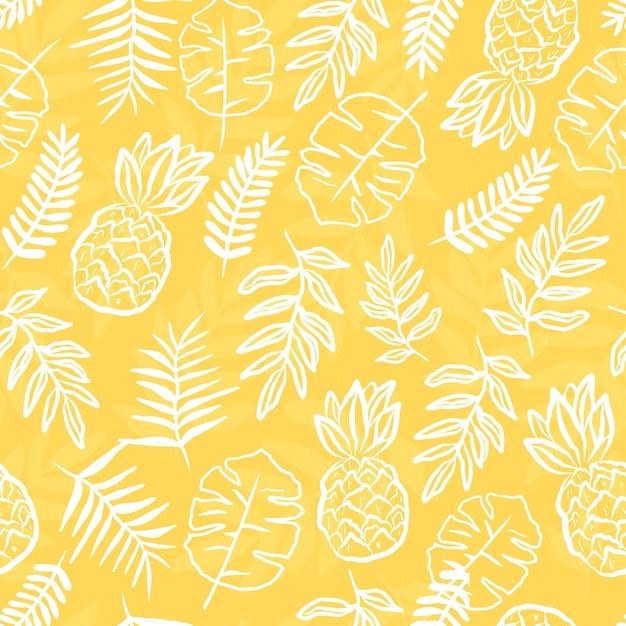
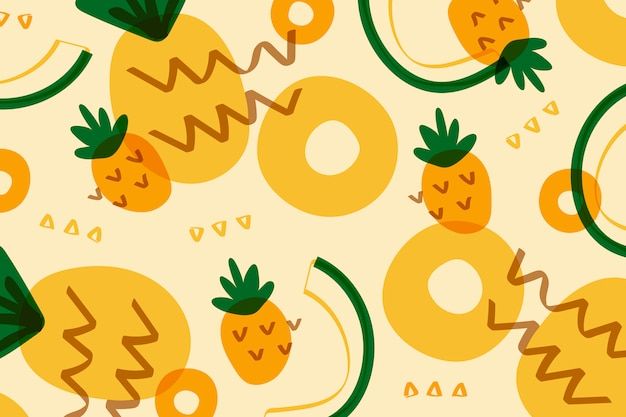
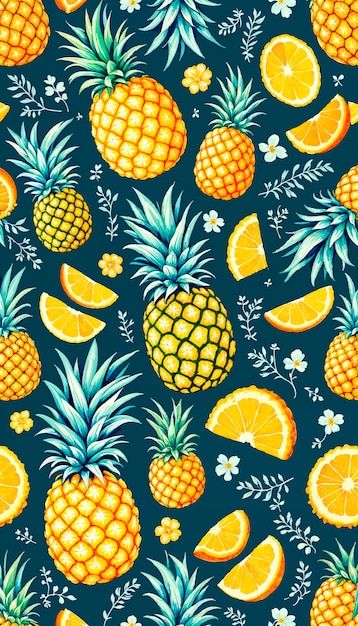
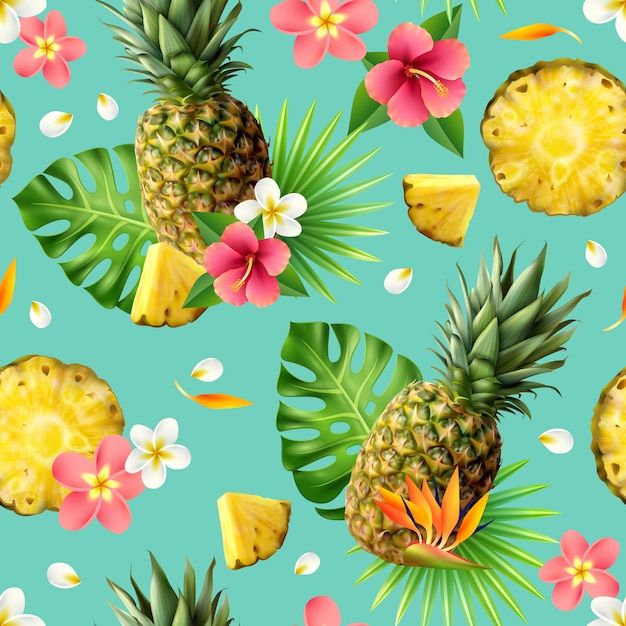
Style range: graphic flat vector (clean fills, bold silhouette), watercolour botanical (detailed illustrative rendering), retro/vintage (1950s-1970s vacation aesthetic), kawaii/cute (cartoon proportions, simplified forms), and crochet-reference (lace-texture graphic rendering of the traditional stitch motif).
Pineapples arrived in Europe in the 16th century as rare imports from South America. In Colonial America and Britain, fresh pineapples were so expensive and difficult to transport that they were displayed as centrepieces at formal dinners before being consumed. This made the pineapple a symbol of wealth and hospitality - a tradition that persisted in architectural decoration (pineapple finials on gate posts) and became embedded in the cultural meaning of the motif.
The crochet pineapple stitch pattern became popular in the mid-19th century and has been a continuous presence in crochet and lace traditions since then. Popular for doilies, shawls, and vintage clothing, it is one of the most recognisable specialty stitches in crochet.
The pineapple's geometric scale structure follows the Fibonacci sequence - intersecting spirals of 5, 8, and 13 scales - a mathematical pattern observed in many botanical structures. This natural geometric organisation has attracted design interest beyond the fruit's cultural associations.
Pineapple patterns occupy a specific position within the broader tropical and fruit pattern category: they carry a cultural legacy that elevates them beyond generic novelty fruit imagery.
The pineapple is a visually distinctive fruit: oval body covered in a geometric scale/diamond pattern, topped by a spiky crown of radiating leaves.
Food
Scatter and Half-Drop
Core palette: pineapple yellow, leaf green, white/cream ground. Secondary palette connections: coral, turquoise, navy, hot pink - the wider tropical resort palette.
Pineapples arrived in Europe in the 16th century as rare imports from South America. In Colonial America and Britain, fresh pineapples were so expensive and difficult to transport that they were displayed as centrepieces at formal dinners before being consumed.