Loading
NEW DESIGNERS ADDED WEEKLY!
The best pattern designers.
Browse & hire professional surface pattern designers for fashion, textiles, interiors & product design.
Browse & hire professional surface pattern designers for fashion, textiles, interiors & product design.
We use cookies to improve your experience and understand how PatternDesigners is used.
Discover pattern styles, motifs & structures used throughout surface pattern design, with visual examples to help you recognise every pattern type.

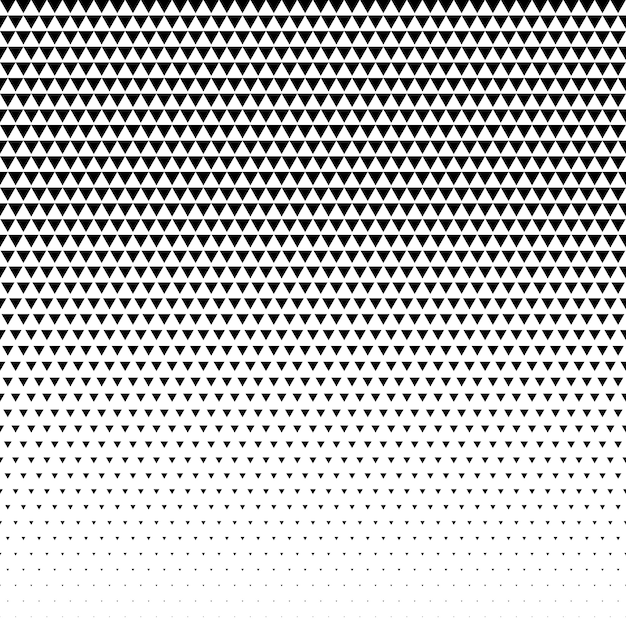
Triangle patterns exploit the fundamental visual properties of the three-sided polygon: directionality (a triangle always points somewhere), the visual contrast between its flat base and sharp apex, and its ability to tile surfaces perfectly with no gap or overlap. In surface pattern, triangles function both as individual repeated motifs and as the structural unit of more complex geometric arrangements. The motif's associations - with stability, power, hierarchy, and dynamic energy - make it a versatile tool across a wide range of design contexts.
Triangle patterns exploit the fundamental visual properties of the three-sided polygon: directionality (a triangle always points somewhere), the visual contrast between its flat base and sharp apex, and its ability to tile surfaces perfectly with no gap or overlap. In surface pattern, triangles function both as individual repeated motifs and as the structural unit of more complex geometric arrangements. The motif's associations - with stability, power, hierarchy, and dynamic energy - make it a versatile tool across a wide range of design contexts.
The visual energy of a triangle pattern depends heavily on orientation:
Triangle type also affects character:
The pointed form of the triangle carries what the source describes as "masculine connotations" - a quality associated with sharpness and aggression rather than the smooth curves associated with feminine aesthetics in conventional design semiotics.
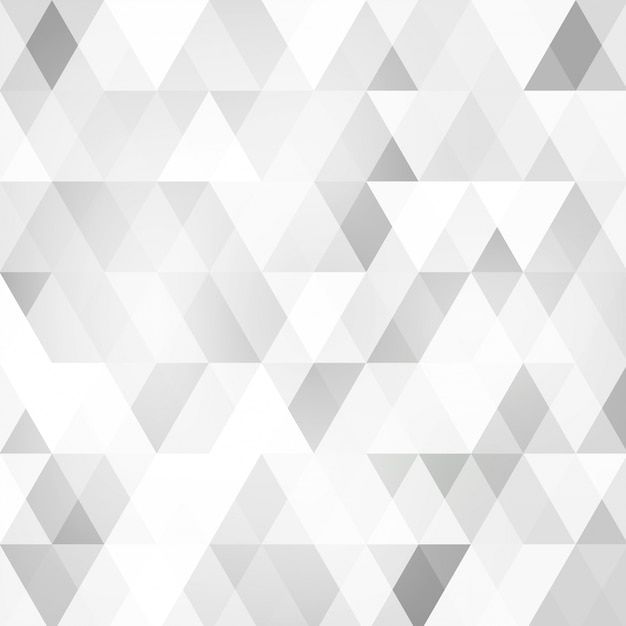
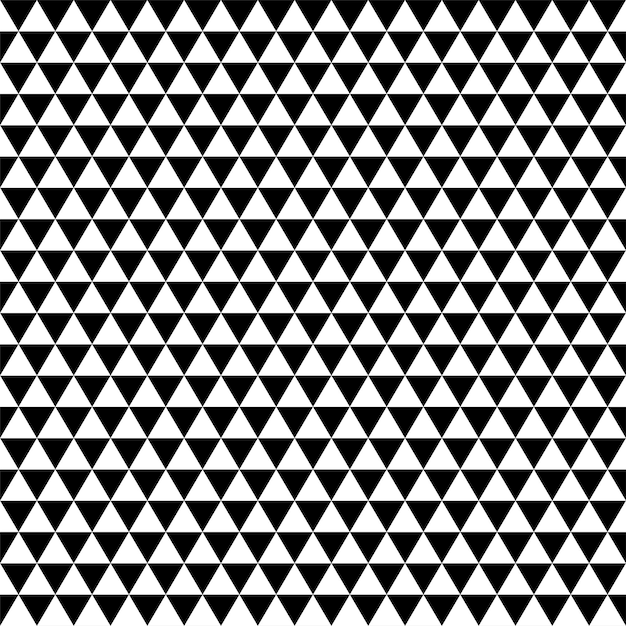
Triangles tile perfectly - equilateral triangles tessellate in a flat grid (two triangles forming a diamond/rhombus, three forming a larger triangle). This tessellating property makes triangles particularly useful in geometric pattern construction. Common triangle repeat arrangements include:
The triangle is structurally fundamental to many complex geometric patterns - Islamic geometric design frequently uses stars and polygons that are constructed from triangular subdivisions of the plane.
The triangle itself is the primary motif. In surface pattern, triangles appear as: mountain or pyramid forms (landscape reference); arrows and directional markers; geometric mosaic elements; pennant and bunting shapes; and stacked or interlocking arrangements. Native American and Navajo textile traditions use triangle and diamond forms extensively as both structural and symbolic elements.
Triangle patterns in high contrast (black and white, or two-tone geometric) read as bold, graphic, and contemporary. Multi-colour triangle mosaics read as complex and energetic. Pastel triangle patterns read as softer and more playful. Earth-tone triangle patterns in Navajo-influenced and global craft aesthetics read as handcraft-adjacent and warm.
The triangle has structural significance across ancient mathematics and philosophy - Aristotle used triangles to represent the four classical elements (fire, water, air, earth) in his elemental diagrams. Pyramids, the most visually powerful triangular architectural form, appear across ancient Egyptian, Mesoamerican, and other cultures. The triangle's associations with power and stability have made it a persistent symbol in technology, law, and construction contexts. In contemporary graphic design and surface pattern, the triangle is associated with modern, clean geometric aesthetics and is widely used in technology and innovation branding.
Triangle patterns exploit the fundamental visual properties of the three-sided polygon: directionality (a triangle always points somewhere), the visual contrast between its flat base and sharp apex, and its ability to tile surfaces perfectly with no gap or overlap.
Geometric
Triangles tile perfectly - equilateral triangles tessellate in a flat grid (two triangles forming a diamond/rhombus, three forming a larger triangle). This tessellating property makes triangles particularly useful in geometric pattern construction.
The triangle itself is the primary motif. In surface pattern, triangles appear as: mountain or pyramid forms (landscape reference); arrows and directional markers; geometric mosaic elements; pennant and bunting shapes; and stacked or interlocking arrangements.
Triangle patterns in high contrast (black and white, or two-tone geometric) read as bold, graphic, and contemporary. Multi-colour triangle mosaics read as complex and energetic. Pastel triangle patterns read as softer and more playful.
The triangle has structural significance across ancient mathematics and philosophy - Aristotle used triangles to represent the four classical elements (fire, water, air, earth) in his elemental diagrams.