Loading
NEW DESIGNERS ADDED WEEKLY!
The best pattern designers.
Browse & hire professional surface pattern designers for fashion, textiles, interiors & product design.
Browse & hire professional surface pattern designers for fashion, textiles, interiors & product design.
We use cookies to improve your experience and understand how PatternDesigners is used.
Discover pattern styles, motifs & structures used throughout surface pattern design, with visual examples to help you recognise every pattern type.

A repeat pattern is any surface design in which a tile (or repeat unit) tessellates seamlessly across a surface. The type of repeat defines the geometric rule by which tiles relate to each other. Different repeat structures produce distinct visual rhythms and suit different markets and applications. In a pattern collection, multiple repeat types are typically used across the hero pattern and its coordinating designs to create variety and hierarchy within a unified colour and motif vocabulary.
A repeat pattern is any surface design in which a tile (or repeat unit) tessellates seamlessly across a surface. The type of repeat defines the geometric rule by which tiles relate to each other. Different repeat structures produce distinct visual rhythms and suit different markets and applications. In a pattern collection, multiple repeat types are typically used across the hero pattern and its coordinating designs to create variety and hierarchy within a unified colour and motif vocabulary.
Visual outcome depends entirely on repeat type combined with motif. The structural choice controls rhythm and formality: block and dot repeats produce ordered, graphic appearances; tossed repeats read as fluid and organic; half-drop and brick offsets introduce diagonal movement; diamond and stripe layouts create strong directional energy. A designer may apply multiple repeat types to the same motif set to produce different moods within a coordinated collection.
The primary repeat types used commercially in surface pattern design:
Block (Full Drop): Single motif or group centred on the artboard, repeating in aligned rows and columns. The simplest construction. Adjusting the size of the central element relative to the artboard controls the density and spacing of the repeat.
Toss / Random: Multiple motifs scattered within the repeat unit with no formal alignment. The four edges must still tile seamlessly. Produces the most organic and informal surface. Most commonly used for hero patterns in a collection due to the visual complexity achievable with many elements.
Dot: A version of the block repeat in which evenly spaced elements - not necessarily literal dots, but any motif repeated at equal intervals in all directions - create a regular, measured surface. The simplest construction variant for any motif category.
Complex Stripe: Motif rows placed at equal horizontal intervals. The "stripe" is not necessarily a solid colour band but may consist of a sequence of motifs, illustrated elements, or texture. Orientation can be vertical, horizontal, or diagonal.
Diamond: Elements organised at the corners and centre of a diamond-shaped artboard, creating a diagonal grid. Connected diamonds produce a more defined lattice; spaced diamonds retain individual framing. Introduces downward falling movement.
Brick / Half Brick: Identical to the half-drop (offset column) principle but applied horizontally: each row is shifted by 50% of the tile width, producing a coursed brick-wall bond effect.
Drop (Half Drop): Vertical column arrangement offset by 50% between adjacent columns. Reduces grid formality and creates more diagonal visual movement than a block repeat.
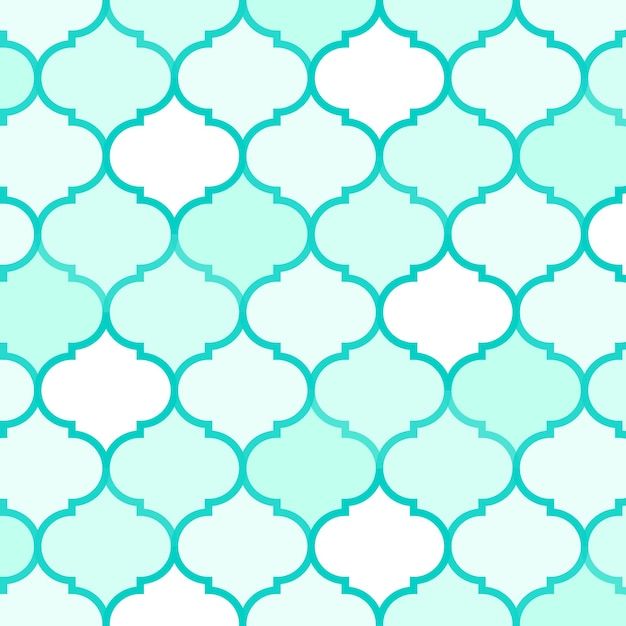
Ogee: Elongated S-curve or onion-arc outline creating an interlocking teardrop or pointed arch grid.
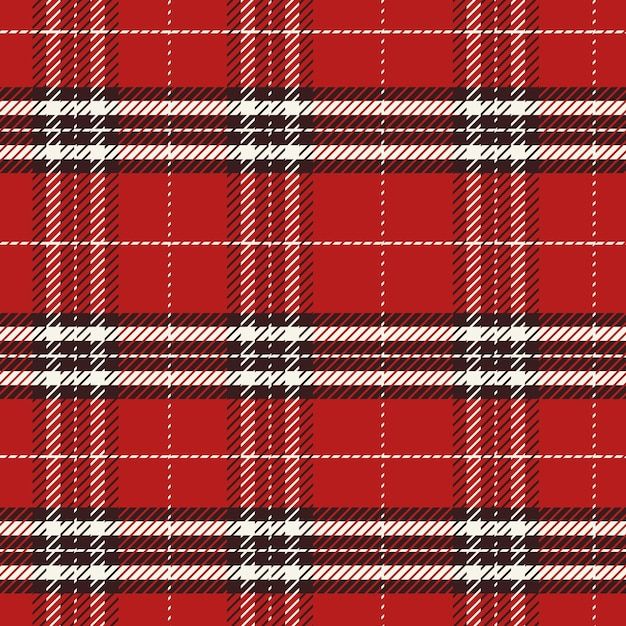
Plaid: Grid of overlapping colour bands forming a checked or tartan-like matrix.
Repeat type is a structural category, not a motif category. All motif types - floral, geometric, conversational, abstract - can be executed in any repeat structure. The structural choice is independent of subject matter.
No fixed palette applies to repeat structure as a category. Colour and style are determined by the specific motif and collection.
The technical vocabulary of repeat types derives from industrial textile production, where different loom and printing repeat configurations were given specific names. Block, half-drop, and brick repeats correspond directly to print-roller and screen-printing registration systems. Digital tools - particularly Adobe Illustrator's pattern swatch and artboard system - have standardised how these repeat types are constructed in contemporary practice. Repeat type literacy is a foundational element of surface pattern design education.
All repeat types are used across the full range of surface pattern markets: apparel fabric, furnishing textiles, wallpaper, gifting, stationery, homeware, and print-on-demand. Specific production contexts may favour certain repeat types:
A repeat pattern is any surface design in which a tile (or repeat unit) tessellates seamlessly across a surface. The type of repeat defines the geometric rule by which tiles relate to each other. Different repeat structures produce distinct visual rhythms and suit different markets and applications.
Visual outcome depends entirely on repeat type combined with motif.
All repeat types are used across the full range of surface pattern markets: apparel fabric, furnishing textiles, wallpaper, gifting, stationery, homeware, and print-on-demand.
The primary repeat types used commercially in surface pattern design: Block (Full Drop): Single motif or group centred on the artboard, repeating in aligned rows and columns. The simplest construction. Adjusting the size of the central element relative to the artboard controls the density and spacing of the repeat.
Repeat type is a structural category, not a motif category. All motif types - floral, geometric, conversational, abstract - can be executed in any repeat structure. The structural choice is independent of subject matter.
No fixed palette applies to repeat structure as a category. Colour and style are determined by the specific motif and collection.
The technical vocabulary of repeat types derives from industrial textile production, where different loom and printing repeat configurations were given specific names. Block, half-drop, and brick repeats correspond directly to print-roller and screen-printing registration systems.
Simple Repeating Pattern, Half Drop Pattern, Diamond Pattern, Ogee Pattern, and Stripe Pattern