Loading
NEW DESIGNERS ADDED WEEKLY!
The best pattern designers.
Browse & hire professional surface pattern designers for fashion, textiles, interiors & product design.
Browse & hire professional surface pattern designers for fashion, textiles, interiors & product design.
We use cookies to improve your experience and understand how PatternDesigners is used.
Discover pattern styles, motifs & structures used throughout surface pattern design, with visual examples to help you recognise every pattern type.

Chinoiserie is not a direct reproduction of Chinese art but a European fantasy of Chinese aesthetics, filtered through trade goods, diplomatic gifts, and imaginative interpretation. It emerged alongside European fascination with East Asian trade goods and was closely associated with the Rococo movement - sharing Rococo's appetite for exuberance, asymmetry, and decorative invention. In surface pattern design, chinoiserie is particularly active in wallpaper, ceramics, upholstery, and luxury interior textiles, where it carries associations with heritage, grandeur, and sophisticated eccentricity. The style has proven commercially durable from its 17th-century origins through to the present.
Chinoiserie is not a direct reproduction of Chinese art but a European fantasy of Chinese aesthetics, filtered through trade goods, diplomatic gifts, and imaginative interpretation. It emerged alongside European fascination with East Asian trade goods and was closely associated with the Rococo movement - sharing Rococo's appetite for exuberance, asymmetry, and decorative invention. In surface pattern design, chinoiserie is particularly active in wallpaper, ceramics, upholstery, and luxury interior textiles, where it carries associations with heritage, grandeur, and sophisticated eccentricity. The style has proven commercially durable from its 17th-century origins through to the present.
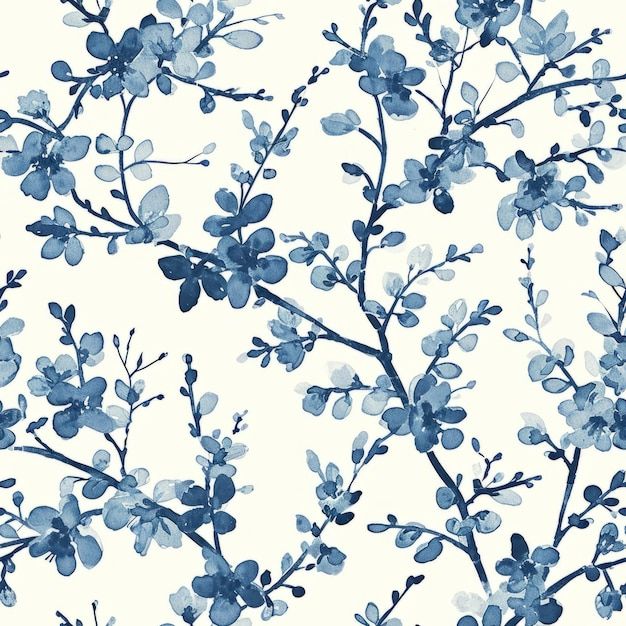
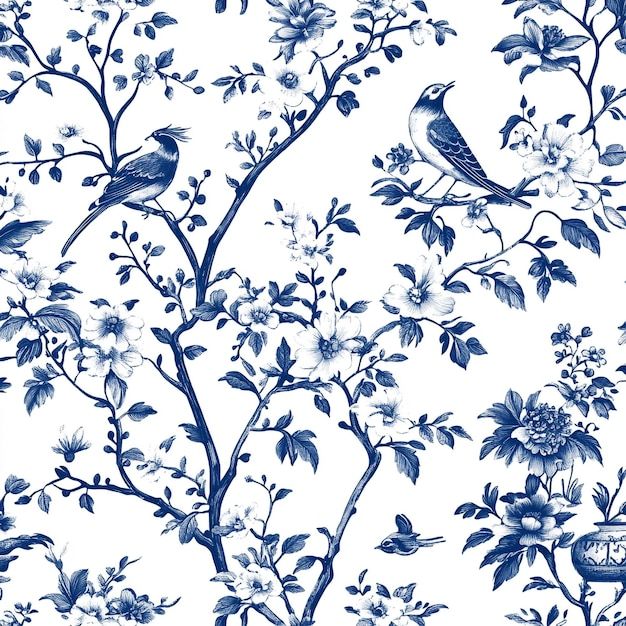
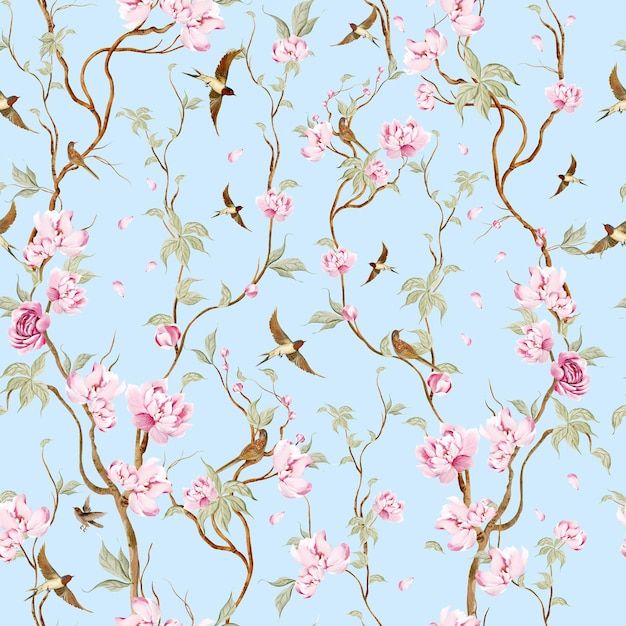
Chinoiserie pattern is characterised by asymmetric, exuberant composition; imaginary landscapes with pagodas, bridges, willow trees, and rocks; exotic birds (particularly pheasants, peacocks, and cranes) among flowering branches; and a general sense of decorative abundance. Blue-and-white colour schemes referencing Chinese porcelain are a major subset of chinoiserie. The overall aesthetic combines European sensibility with East Asian motif vocabulary - the result being neither authentically Chinese nor wholly Western but a distinct hybrid aesthetic.
Chinoiserie pattern typically uses scenic, non-repeating or large-repeat panel compositions - particularly in wallpaper applications, where hand-painted or block-printed chinoiserie scenes were designed as continuous scenic murals rather than small tile repeats. Textile applications use larger all-over repeats incorporating pagodas, birds, and florals. The Chippendale furniture tradition applied chinoiserie motifs (lacquerwork, birds, flowers, asymmetric lattice) to decorative woodwork surfaces. Blue-and-white porcelain (Delftware) adapted Chinese blue-on-white painting into European ceramic production.
The dominant chinoiserie palette is blue-and-white - derived from Chinese blue-and-white porcelain imported to Europe and subsequently imitated in Delftware. Polychrome chinoiserie uses the rich palette of Chinese export porcelain and lacquerwork: jade green, cinnabar red, gilt gold, black, and ivory. Grisaille chinoiserie (grey tonal work on light ground) is associated with the most refined 18th-century applications. Rex Whistler's chinoiserie wallpaper of 1932 exemplifies a 20th-century revival. Contemporary chinoiserie can appear in any colourway, though blue-and-white and polychrome remain the market reference points.
Chinoiserie developed in Europe from the 17th century as European courts became fascinated with Chinese lacquerwork, porcelain, silk, and decorative objects imported via the East India trade companies. It peaked in the 18th century as part of the broader Rococo movement, finding its most elaborate expressions in royal palaces and aristocratic interiors across France, Britain, Prussia, and Sweden. George IV of Britain was a major patron of chinoiserie decoration. Louis XV gave special favour to chinoiserie at the French court. Designers cited in connection with chinoiserie include Thomas Chippendale (furniture and lacquer), Mariano Fortuny, Callot Soeurs, and Jean Paquin (fashion). Tom Ford used a Chinese dragon print satin evening dress for Yves Saint Laurent in 2004. Rex Whistler created a chinoiserie wallpaper scheme in 1932. The Buckingham Palace Yellow Drawing Room is a documented chinoiserie interior example. In ceramics, Delftware (Delft, Netherlands) represents the most commercially significant European chinoiserie production tradition.
Chinoiserie is not a direct reproduction of Chinese art but a European fantasy of Chinese aesthetics, filtered through trade goods, diplomatic gifts, and imaginative interpretation.
Chinoiserie pattern is characterised by asymmetric, exuberant composition; imaginary landscapes with pagodas, bridges, willow trees, and rocks; exotic birds (particularly pheasants, peacocks, and cranes) among flowering branches; and a general sense of decorative abundance.
Heritage
Chinoiserie pattern typically uses scenic, non-repeating or large-repeat panel compositions - particularly in wallpaper applications, where hand-painted or block-printed chinoiserie scenes were designed as continuous scenic murals rather than small tile repeats.
Animal and Botanical
The dominant chinoiserie palette is blue-and-white - derived from Chinese blue-and-white porcelain imported to Europe and subsequently imitated in Delftware. Polychrome chinoiserie uses the rich palette of Chinese export porcelain and lacquerwork: jade green, cinnabar red, gilt gold, black, and ivory.
Chinoiserie developed in Europe from the 17th century as European courts became fascinated with Chinese lacquerwork, porcelain, silk, and decorative objects imported via the East India trade companies.
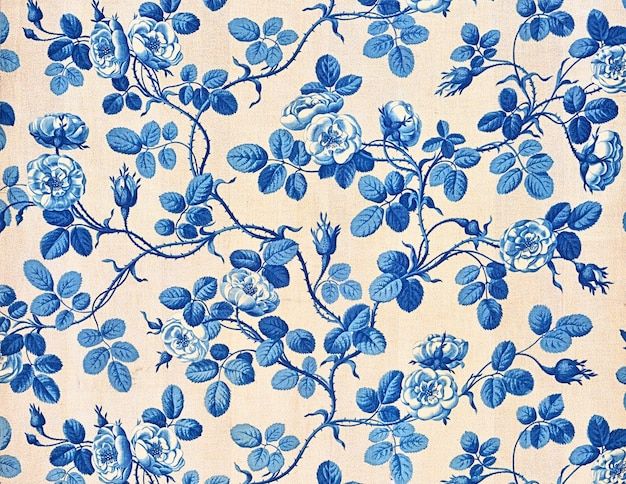
Blue Pattern, Dragon Pattern, and Floral Pattern