Loading
NEW DESIGNERS ADDED WEEKLY!
The best pattern designers.
Browse & hire professional surface pattern designers for fashion, textiles, interiors & product design.
Browse & hire professional surface pattern designers for fashion, textiles, interiors & product design.
We use cookies to improve your experience and understand how PatternDesigners is used.
Discover pattern styles, motifs & structures used throughout surface pattern design, with visual examples to help you recognise every pattern type.

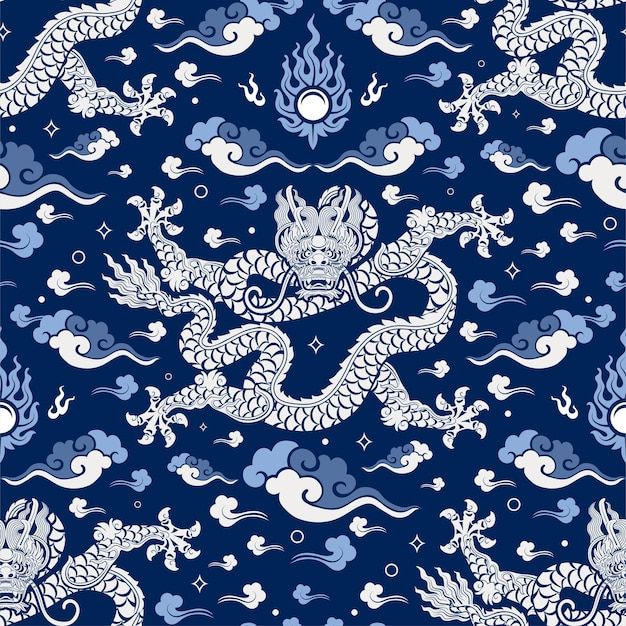
Dragon pattern in surface design is dominated by East Asian iconographic traditions - particularly the Chinese imperial dragon with its coiled body, five claws, and accompanying symbolic elements (flaming pearl, clouds, waves). This tradition connects to one of the most historically significant applications of surface pattern design: the ceremonial robes of Chinese, Korean, and Japanese imperial courts, in which dragon motifs were encoded symbols of rank and political authority. In contemporary surface design, dragon pattern carries associations with power, mythology, and Asian cultural heritage, and is commercially active across fashion, wallpaper, licensing, and gift products.
Dragon pattern in surface design is dominated by East Asian iconographic traditions - particularly the Chinese imperial dragon with its coiled body, five claws, and accompanying symbolic elements (flaming pearl, clouds, waves). This tradition connects to one of the most historically significant applications of surface pattern design: the ceremonial robes of Chinese, Korean, and Japanese imperial courts, in which dragon motifs were encoded symbols of rank and political authority. In contemporary surface design, dragon pattern carries associations with power, mythology, and Asian cultural heritage, and is commercially active across fashion, wallpaper, licensing, and gift products.
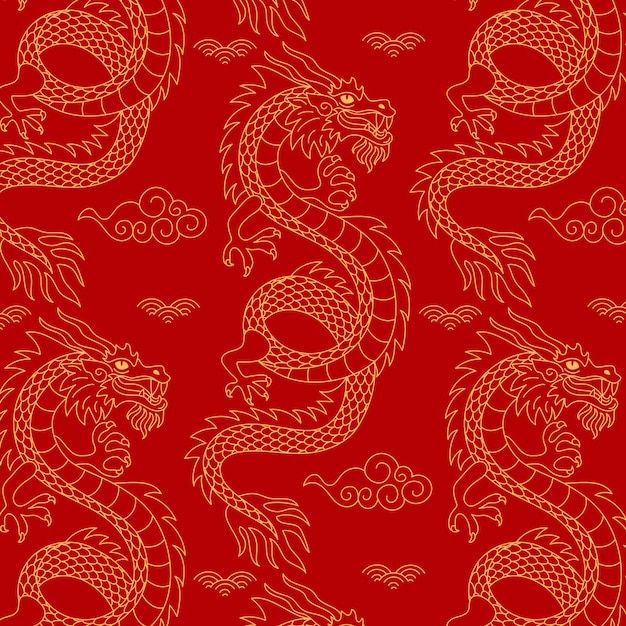
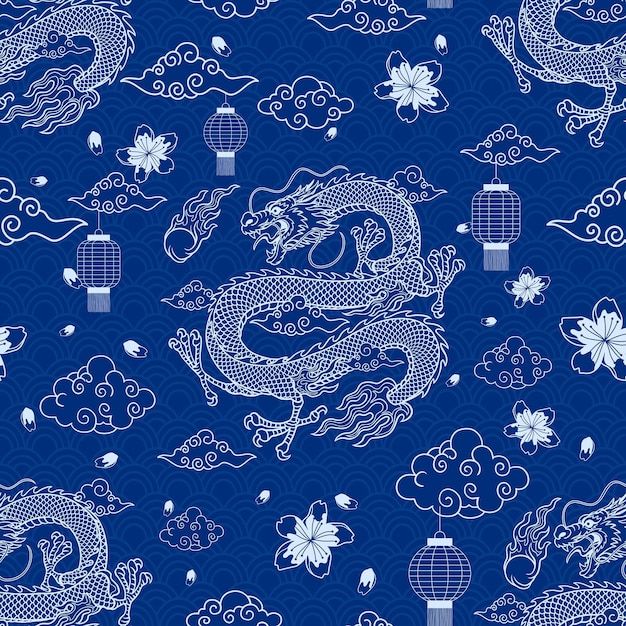
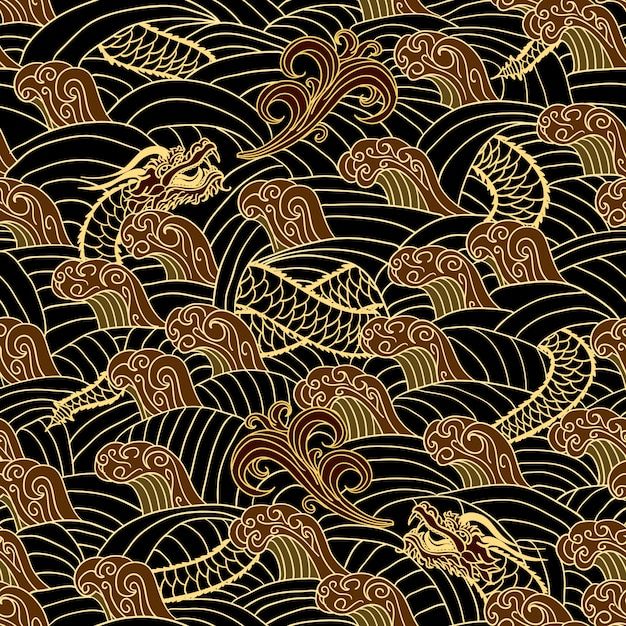
The Chinese dragon form is characterised by a long winding serpentine body, large scaled mane, prominent antler-like horns, and clawed feet. Unlike Western dragons, Chinese dragons typically have no wings - their ability to fly is inherent. The five-clawed dragon is an imperial emblem; four-clawed variants were used for lower nobility; three-clawed dragons appear in Japanese tradition. Accompanying motifs - flaming pearls, stylised clouds, ocean waves, and fire - are integral components of the dragon composition, filling the space around the dragon form and giving the composition its characteristic dynamism and density.
Dragon patterns in historical textile applications use large-scale positioned motifs rather than small all-over repeats:
Chinese imperial dragon robes used a specific set of regulated colours. Yellow was reserved for the emperor; other ranked persons used specific colours including blue, red, and brown. Gold thread embroidery was standard in high-status court textiles. Contemporary surface design dragon pattern uses any colourway - black and gold for luxury/editorial positioning; red and gold for Chinese cultural celebration contexts; jewel tones for fashion applications; graphic black-and-white for tattoo-adjacent design work.
The Chinese imperial dragon has been an emblem of the emperor since at least the Han dynasty (206 BC - 220 AD). Post-Tang dynasty emperors restricted dragon imagery to imperial use on clothing and articles. Ming (1368-1644) and Qing (1644-1912) dynasty ceremonial robes - intricate embroidered garments - are among the most elaborate textile applications of dragon pattern in history, with the number of dragon claws explicitly regulated by rank. In Korea, the dragon robe (용포) used a five-taloned dragon for the king and four-taloned for the crown prince - a direct parallel to the Chinese system. In Japan, dragons are depicted as three-clawed water deities. The Mesopotamian mušḫuššu (a composite dragon-like creature) represents an entirely separate iconographic tradition. The ouroboros - a dragon or serpent eating its own tail - appears across Egyptian, Greek, and alchemical traditions. Modern commercial applications of dragon pattern span surface design for fabrics, wallpapers, wrapping paper, apparel graphics, and packaging.
Dragon pattern in surface design is dominated by East Asian iconographic traditions - particularly the Chinese imperial dragon with its coiled body, five claws, and accompanying symbolic elements (flaming pearl, clouds, waves).
The Chinese dragon form is characterised by a long winding serpentine body, large scaled mane, prominent antler-like horns, and clawed feet. Unlike Western dragons, Chinese dragons typically have no wings - their ability to fly is inherent.
Novelty
Radial and Border
Mythical
Chinese imperial dragon robes used a specific set of regulated colours. Yellow was reserved for the emperor; other ranked persons used specific colours including blue, red, and brown. Gold thread embroidery was standard in high-status court textiles.
The Chinese imperial dragon has been an emblem of the emperor since at least the Han dynasty (206 BC - 220 AD). Post-Tang dynasty emperors restricted dragon imagery to imperial use on clothing and articles.
Chinoiserie Pattern and Scale Pattern