Loading
NEW DESIGNERS ADDED WEEKLY!
The best pattern designers.
Browse & hire professional surface pattern designers for fashion, textiles, interiors & product design.
Browse & hire professional surface pattern designers for fashion, textiles, interiors & product design.
We use cookies to improve your experience and understand how PatternDesigners is used.
Discover pattern styles, motifs & structures used throughout surface pattern design, with visual examples to help you recognise every pattern type.

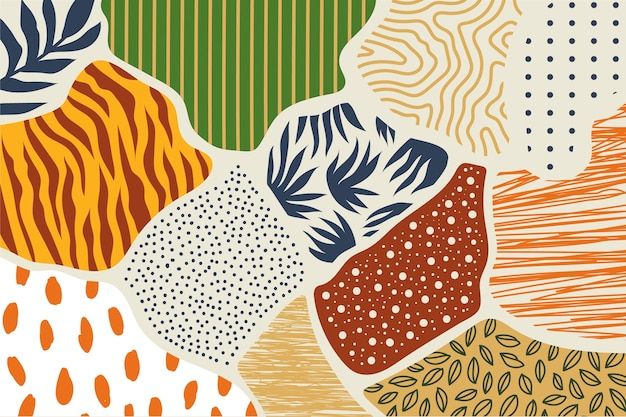
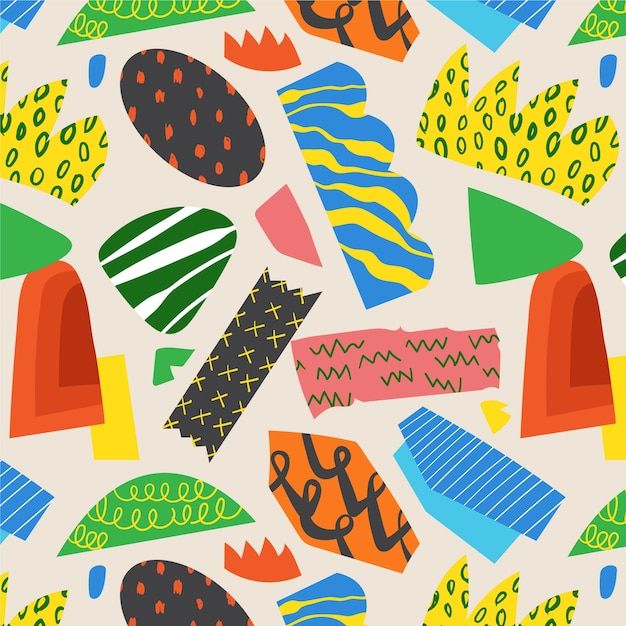
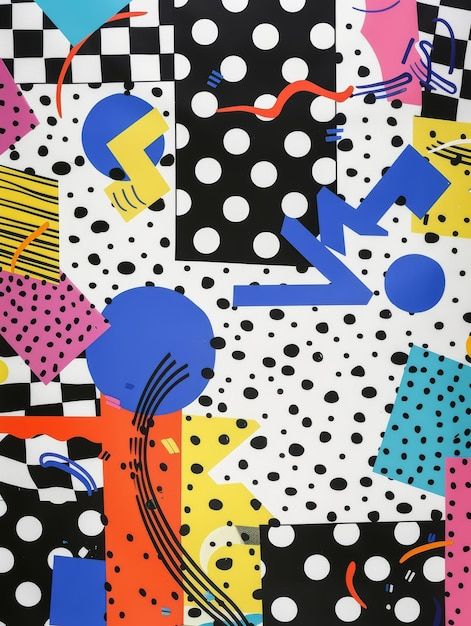
Collage as a surface pattern approach is both a historical fine art lineage and a current digital workflow. In physical practice it involves cutting, tearing, and combining paper, photographs, fabric, or found material into a compositional surface. In digital design the same visual logic applies: layering scanned textures, photographs, hand-drawn elements, and type into a single assembled image. Both versions translate into repeating surface patterns with a characteristically layered, eclectic visual texture.
Collage as a surface pattern approach is both a historical fine art lineage and a current digital workflow. In physical practice it involves cutting, tearing, and combining paper, photographs, fabric, or found material into a compositional surface. In digital design the same visual logic applies: layering scanned textures, photographs, hand-drawn elements, and type into a single assembled image. Both versions translate into repeating surface patterns with a characteristically layered, eclectic visual texture.
Collage patterns are distinguished by visible fragment edges (cut or torn), overlapping layers, mixed material qualities (photographic, illustrative, textural), and deliberate compositional tension between elements. The aesthetic reads as assembled rather than drawn or woven. Scale and medium variety within a single composition is a defining quality.
Collage patterns resist standard geometric repeat structures. Free-placement and editorial compositions are typical. When tiled, the intent is usually to preserve apparent randomness - making the seam invisible through compositional complexity rather than geometric precision.
Palette is determined by source materials. Collage can range from monochrome archival photography to vivid multi-coloured mixed media. Digital collage often combines scanned vintage paper, photographic elements, and drawn mark-making. The overall register tends toward layered complexity rather than flat graphic clarity.
The term derives from the French coller ("to glue"). Collage as a named fine art practice emerged in 1912 with Picasso and Braque's papier collé experiments - pasting cut newspaper and printed material into Cubist compositions. Dada artists, particularly Hannah Höch, developed photomontage as a politically charged collage form. Surrealism extended collage into dreamlike visual combinations.
Découpage - a related decorative technique using cut paper applied to surfaces - has older roots: originating in East Siberian funerary art, adopted in China, then entering Venice and Italy by the 17th century before spreading through France and Europe.
Mary Delany created 985 detailed botanical collages ("paper mosaics") in the 18th century using cut coloured paper, producing work of considerable precision that anticipates later botanical surface pattern approaches.
In children's publishing, Eric Carle's illustrated books - built from hand-textured and hand-painted cut papers - represent a widely recognised collage aesthetic that has directly influenced pattern design.
Collage as a surface pattern approach is both a historical fine art lineage and a current digital workflow. In physical practice it involves cutting, tearing, and combining paper, photographs, fabric, or found material into a compositional surface.
Collage patterns are distinguished by visible fragment edges (cut or torn), overlapping layers, mixed material qualities (photographic, illustrative, textural), and deliberate compositional tension between elements. The aesthetic reads as assembled rather than drawn or woven.
Fashion and editorial textile prints Digital surface pattern design (primary contemporary application) Fabric and textile collage (raw-edge quilting and mixed-media textile work) Wallpaper and interior graphics Stationery and print design
Collage patterns resist standard geometric repeat structures. Free-placement and editorial compositions are typical. When tiled, the intent is usually to preserve apparent randomness - making the seam invisible through compositional complexity rather than geometric precision.
Cut paper shapes Photographic fragments and photomontage elements Hand-drawn or painted textures Found typography and ephemera Botanical specimens (historic tradition: Mary Delany's paper mosaics) Fabric and textile fragments (textile collage / raw-edge techniques)
Palette is determined by source materials. Collage can range from monochrome archival photography to vivid multi-coloured mixed media. Digital collage often combines scanned vintage paper, photographic elements, and drawn mark-making.
The term derives from the French coller ("to glue"). Collage as a named fine art practice emerged in 1912 with Picasso and Braque's papier collé experiments - pasting cut newspaper and printed material into Cubist compositions.
Digital Pattern