Loading
NEW DESIGNERS ADDED WEEKLY!
The best pattern designers.
Browse & hire professional surface pattern designers for fashion, textiles, interiors & product design.
Browse & hire professional surface pattern designers for fashion, textiles, interiors & product design.
We use cookies to improve your experience and understand how PatternDesigners is used.
Discover pattern styles, motifs & structures used throughout surface pattern design, with visual examples to help you recognise every pattern type.

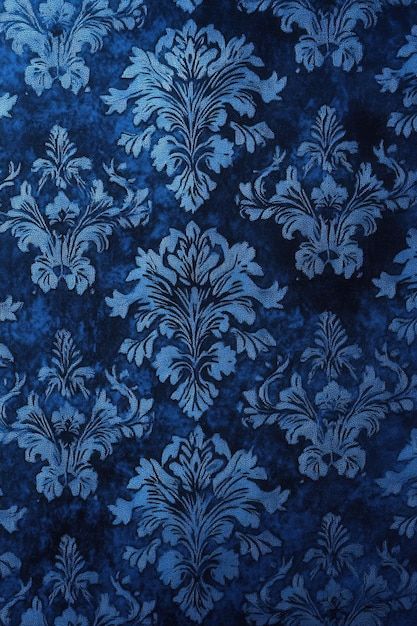
Damask is simultaneously a weaving technique and a surface pattern aesthetic. As a woven fabric, it is defined by its structure: a warp-faced satin pattern woven against a weft-faced satin ground using the same thread set, producing a reversible fabric where the pattern appears on both sides but in inverse tone. As a pattern aesthetic, damask refers to the large-scale ornamental vocabulary - medallions, scrolls, florals, and architectural forms - that developed through this technique. In surface pattern design, damask motifs are reproduced by printing as well as weaving, and are commercially active in wallpaper, home textiles, and licensing across heritage, formal, and ironically-deployed contexts.
Damask is simultaneously a weaving technique and a surface pattern aesthetic. As a woven fabric, it is defined by its structure: a warp-faced satin pattern woven against a weft-faced satin ground using the same thread set, producing a reversible fabric where the pattern appears on both sides but in inverse tone. As a pattern aesthetic, damask refers to the large-scale ornamental vocabulary - medallions, scrolls, florals, and architectural forms - that developed through this technique. In surface pattern design, damask motifs are reproduced by printing as well as weaving, and are commercially active in wallpaper, home textiles, and licensing across heritage, formal, and ironically-deployed contexts.
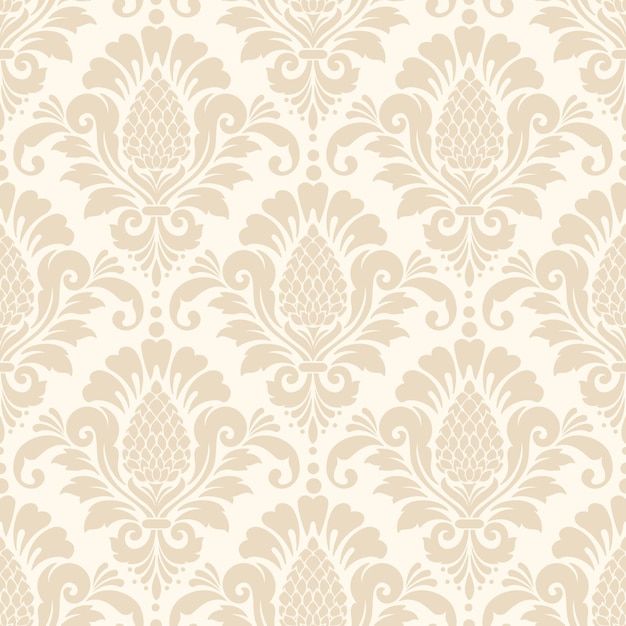
Damask pattern is defined by high visual complexity within a restrained tonal range. The classic damask is single-colour - the satin weave structure creates contrasting tonal areas through light reflection rather than pigment difference. Two-colour and polychrome damask (including gold brocade variations) are also historical. The motif vocabulary is characteristically formal: large medallion forms, elaborate scrollwork, stylised florals, and architectural repeats. The overall surface is rich and dense with ornamentation but resolved into a legible hierarchical composition - typically with a strong central motif and regular repeat frame.
Damask uses a large-scale, regular all-over repeat structure. The repeat unit typically contains a primary medallion or floral motif with surrounding fill ornament, framed by secondary repeat elements. Pattern repeat sizes for historical woven damask can be substantial - one Museum of Fine Arts Boston example shows a repeat of 7cm × 6.5cm in a fine brocade, while large furnishing damask could run to 50cm or more. The reversible character of the woven structure means the pattern can function identically on both faces - a feature exploited in table linen folding and in reversible furnishing fabric applications.
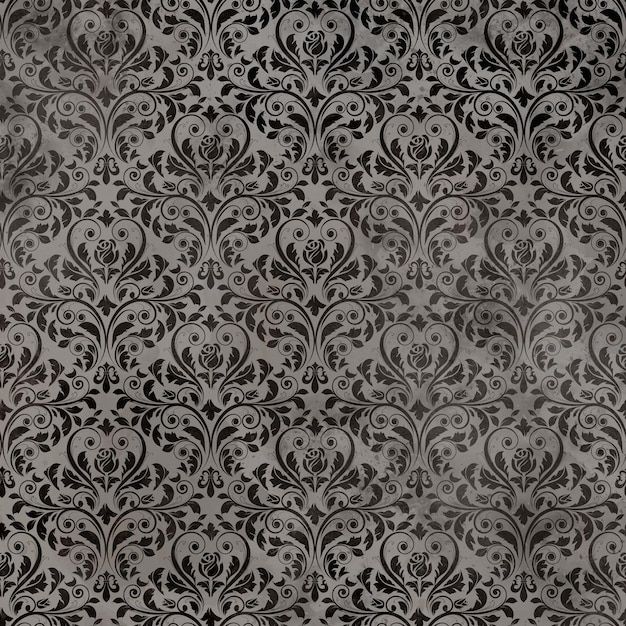
The single-colour woven damask presents a tonal ivory, white-on-white, or cream-on-cream surface - the pattern visible only through sheen and reflection difference. Two-colour damask uses a contrasting ground and pattern colour - typical combinations include gold/cream, red/gold, navy/gold, and ivory/silver. Polychrome damask with gold thread (brocade) represents the most historically prestigious variant. In printed damask, any colourway is possible - including the ironic deployment of damask motifs in non-traditional colours (black on dark, single bright tone, neon) that references the heritage aesthetic while subverting its formality.
Damask is named after Damascus, the Syrian city that was a major Silk Road trading centre. Tang dynasty China (618-907 AD) produced figured silk textiles using damask weave techniques; Byzantine and Middle Eastern weavers developed the technique into the elaborate form that reached Europe via trade routes. True damask uses silk as its primary material; later European production used linen (for table linen), wool, and cotton in addition to silk. The introduction of the Jacquard loom in the 19th century made complex damask figure weaving mechanically reproducible at scale, democratising a previously luxury-restricted fabric. Modern computerised Jacquard looms continue the tradition. Damask types include: true (silk), single (monochrome), compound (multi-element), twill damask, and brocade damask (with supplementary gold or silver thread). The MFA Boston example documents a gold-threaded brocade with twill weave structure and a 7cm × 6.5cm pattern repeat in silk and flat gold thread.
Damask is simultaneously a weaving technique and a surface pattern aesthetic. As a woven fabric, it is defined by its structure: a warp-faced satin pattern woven against a weft-faced satin ground using the same thread set, producing a reversible fabric where the pattern appears on both sides but in inverse tone.
Damask pattern is defined by high visual complexity within a restrained tonal range. The classic damask is single-colour - the satin weave structure creates contrasting tonal areas through light reflection rather than pigment difference.
Heritage
Damask uses a large-scale, regular all-over repeat structure. The repeat unit typically contains a primary medallion or floral motif with surrounding fill ornament, framed by secondary repeat elements. 5cm in a fine brocade, while large furnishing damask could run to 50cm or more.
Central medallion forms (oval, diamond, lozenge) Scrolling acanthus and arabesque foliage Large stylised flowers and pomegranate forms Architectural and cartouche frame elements Diagonal lattice with floral fill Paisley-adjacent curved forms Symmetrical bilateral compositions centred on a strong vertical axis
The single-colour woven damask presents a tonal ivory, white-on-white, or cream-on-cream surface - the pattern visible only through sheen and reflection difference. Two-colour damask uses a contrasting ground and pattern colour - typical combinations include gold/cream, red/gold, navy/gold, and ivory/silver.
Damask is named after Damascus, the Syrian city that was a major Silk Road trading centre. Tang dynasty China (618-907 AD) produced figured silk textiles using damask weave techniques; Byzantine and Middle Eastern weavers developed the technique into the elaborate form that reached Europe via trade routes.
Arabesque Pattern, Floral Pattern, and Chinoiserie Pattern