Loading
NEW DESIGNERS ADDED WEEKLY!
The best pattern designers.
Browse & hire professional surface pattern designers for fashion, textiles, interiors & product design.
Browse & hire professional surface pattern designers for fashion, textiles, interiors & product design.
We use cookies to improve your experience and understand how PatternDesigners is used.
Discover pattern styles, motifs & structures used throughout surface pattern design, with visual examples to help you recognise every pattern type.

Dinosaur pattern is a commercially reliable children's motif category with consistent market demand. Driven by the persistent cultural popularity of dinosaurs - sustained through museum exhibits, film franchises such as Jurassic Park, and children's media - the category provides surface pattern designers with a distinctive zoological subject that combines fantasy appeal with factual content. Dinosaur pattern is primarily positioned in children's markets but has expanded into adult and lifestyle applications through ironic, graphic, and nostalgic treatments.
Dinosaur pattern is a commercially reliable children's motif category with consistent market demand. Driven by the persistent cultural popularity of dinosaurs - sustained through museum exhibits, film franchises such as Jurassic Park, and children's media - the category provides surface pattern designers with a distinctive zoological subject that combines fantasy appeal with factual content. Dinosaur pattern is primarily positioned in children's markets but has expanded into adult and lifestyle applications through ironic, graphic, and nostalgic treatments.
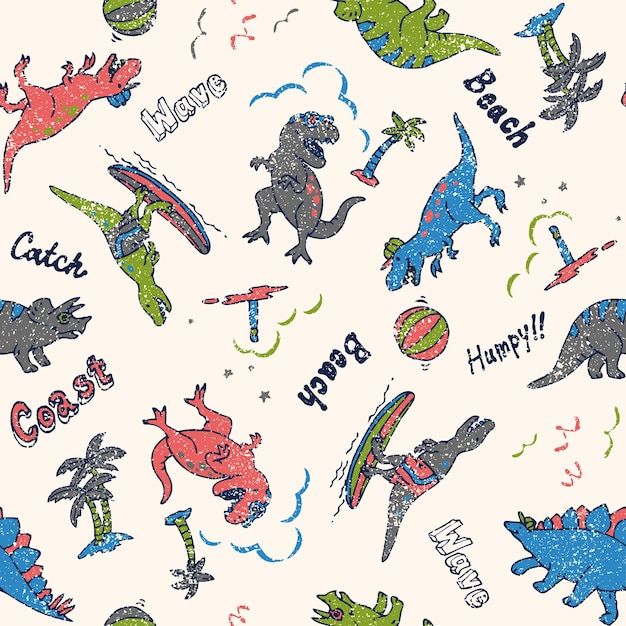
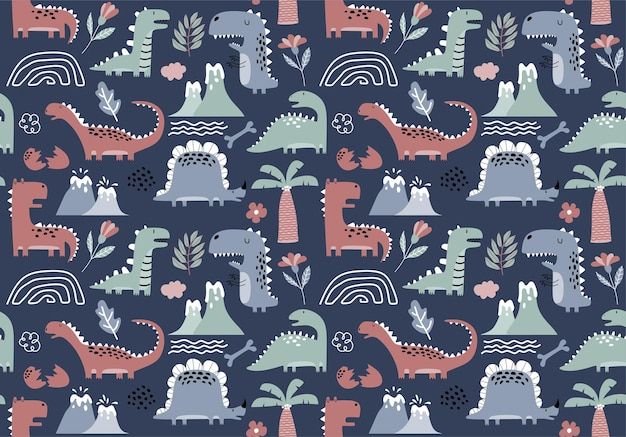
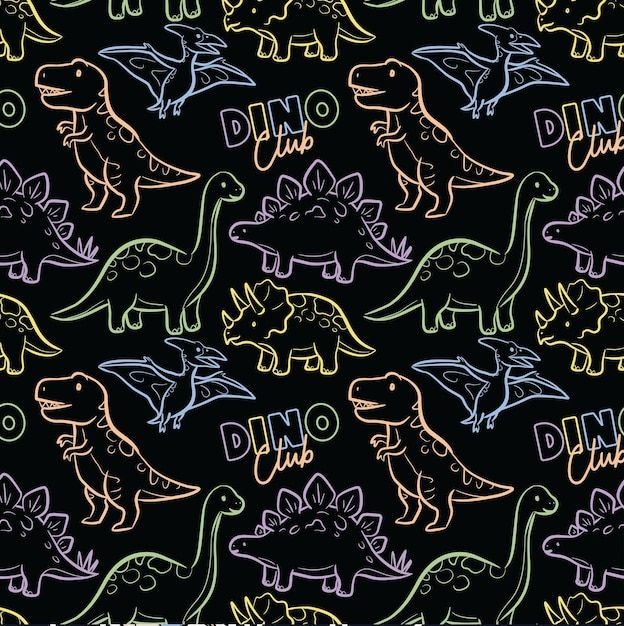
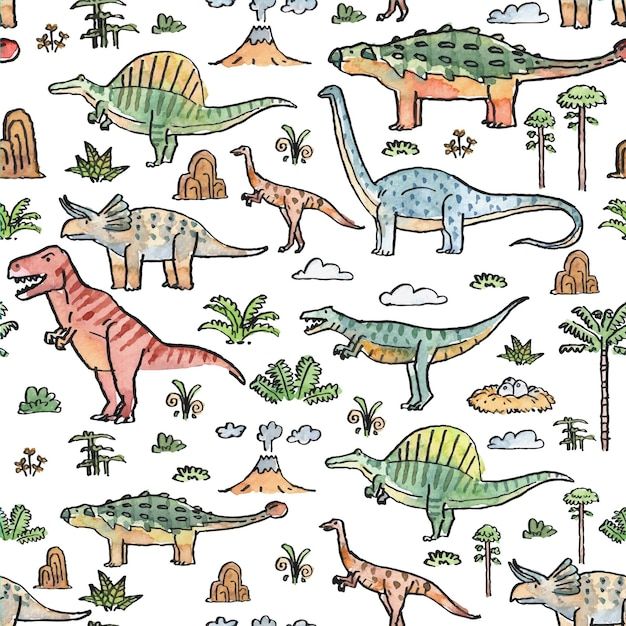
Dinosaur patterns use a range of illustration styles: playful and cartoon-style for young children's products; scientifically accurate and realistic for nature-reference positioning; geometric and abstract for more design-led adult or lifestyle applications. The silhouettes and scale of dinosaurs - from the massive long-neck forms of sauropods (Brachiosaurus, Diplodocus) through the bipedal predator profile of theropods (T-Rex, Velociraptor) to the armoured forms of ankylosaurs and the horned profile of Triceratops - provide a visually diverse motif vocabulary with strong individual recognisability.
Dinosaur patterns commonly use:
Children's dinosaur pattern uses bright, saturated, easily distinguishable colours - greens, teals, blues, reds, and yellows are common. Naturalistic treatments use olive greens, earth tones, and warm greys referencing palaeontological reconstruction colouring. Geometric and abstract dinosaur pattern may use any palette including monochrome, pastels, or bold primary combinations. Background colours are often white or light grounds for children's fabric; darker grounds for more design-led lifestyle applications.
Dinosaurs became a major cultural presence following the naming of Dinosauria by Richard Owen in 1842 and the subsequent mounting of fossil skeletons in natural history museums worldwide. Museum displays established dinosaur anatomy as widely recognised visual vocabulary. The Jurassic Park franchise (1993 onwards) drove a major commercial expansion of dinosaur-themed consumer products. Persistent public enthusiasm for dinosaur science and popular culture has maintained the category as a commercially reliable children's pattern subject. The source notes that dinosaur patterns are "widely used in children's apparel, nursery wallpaper, textile prints, and digital media."
Dinosaur pattern is a commercially reliable children's motif category with consistent market demand.
Dinosaur patterns use a range of illustration styles: playful and cartoon-style for young children's products; scientifically accurate and realistic for nature-reference positioning; geometric and abstract for more design-led adult or lifestyle applications.
Animal
Scatter
Animal
Children's dinosaur pattern uses bright, saturated, easily distinguishable colours - greens, teals, blues, reds, and yellows are common. Naturalistic treatments use olive greens, earth tones, and warm greys referencing palaeontological reconstruction colouring.
Dinosaurs became a major cultural presence following the naming of Dinosauria by Richard Owen in 1842 and the subsequent mounting of fossil skeletons in natural history museums worldwide. Museum displays established dinosaur anatomy as widely recognised visual vocabulary.
Animal Pattern