Loading
NEW DESIGNERS ADDED WEEKLY!
The best pattern designers.
Browse & hire professional surface pattern designers for fashion, textiles, interiors & product design.
Browse & hire professional surface pattern designers for fashion, textiles, interiors & product design.
We use cookies to improve your experience and understand how PatternDesigners is used.
Discover pattern styles, motifs & structures used throughout surface pattern design, with visual examples to help you recognise every pattern type.

Dog pattern draws on one of the oldest and most widespread human-animal relationships. Dogs have been depicted in decorative arts across cultures and centuries - from prehistoric rock carvings and Greek ceramics through Renaissance portraiture and Victorian oil painting to contemporary character illustration. As a surface pattern motif, dog imagery carries strong associations with loyalty, companionship, and domestic life, making it commercially reliable across gifting, home textiles, and lifestyle products. The variety of dog breeds provides a visually rich design vocabulary - from the elegant silhouette of the greyhound through the square-headed bulldog to the fluffy outline of the samoyed.
Dog pattern draws on one of the oldest and most widespread human-animal relationships. Dogs have been depicted in decorative arts across cultures and centuries - from prehistoric rock carvings and Greek ceramics through Renaissance portraiture and Victorian oil painting to contemporary character illustration. As a surface pattern motif, dog imagery carries strong associations with loyalty, companionship, and domestic life, making it commercially reliable across gifting, home textiles, and lifestyle products. The variety of dog breeds provides a visually rich design vocabulary - from the elegant silhouette of the greyhound through the square-headed bulldog to the fluffy outline of the samoyed.
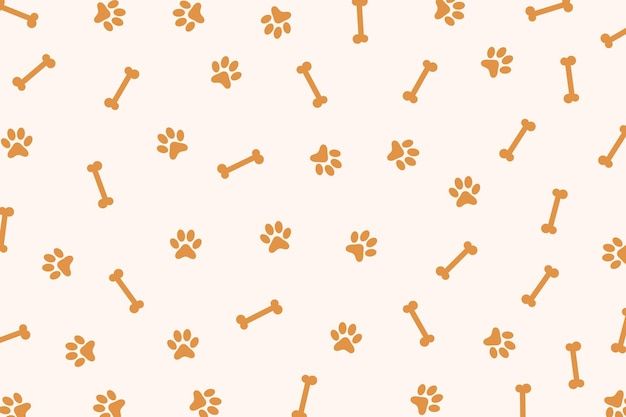
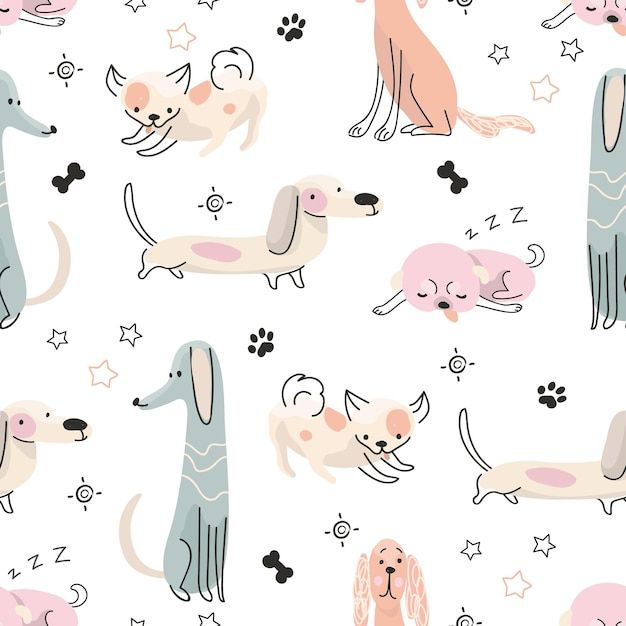
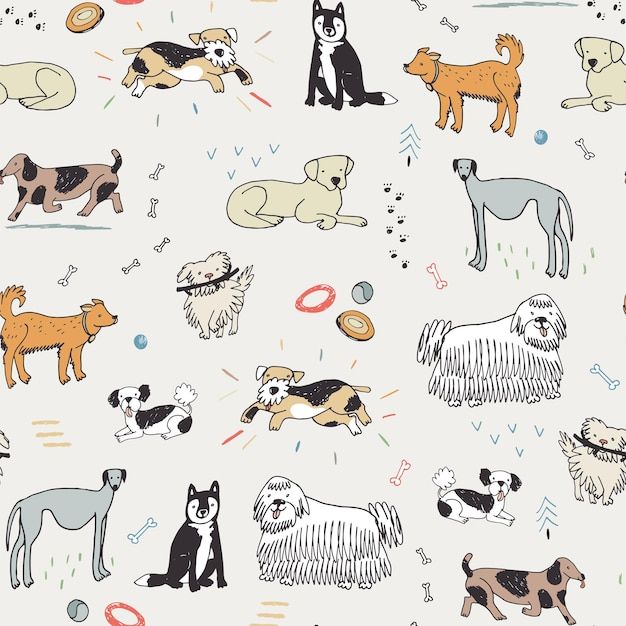
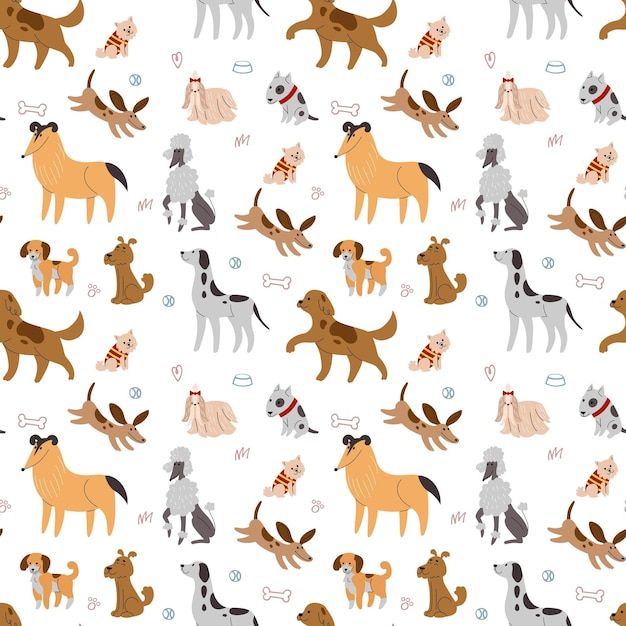
Dog patterns vary widely by style and intended market: realistic breed portraits; stylised or cartoon character illustration; silhouette and outline forms; and abstract breed-pattern references (hound's-tooth, a check derived from herringbone weave). Heraldic dog depictions use specific formal conventions - greyhounds are shown courant (running), mastiffs and talbot hounds are shown passant (walking). Victorian dog portraiture established a tradition of high-detail oil-paint-style breed illustration that continues as a surface pattern reference. Japanese netsuke and Edo-period objects contributed carved dog motifs to the decorative arts vocabulary.
Dog patterns commonly appear as:
Dog patterns use any colourway appropriate to the market application. Realistic breed illustration uses the animal's natural coat colours. Heraldic and historical treatments use the formal palette of heraldry - gold, red, blue, black, and silver on white or coloured grounds. Contemporary character illustration uses bold, graphic colour combinations. Earthy and muted tones are associated with country/equestrian dog pattern positioning; bright saturated colours with children's and novelty applications.
Dog depictions appear in rock shelter paintings approximately 9,000 years old (Bhimbetka, India). Bronze Age tomb decorations include dog imagery. Greek and Roman ceramics, reliefs, and mosaics frequently depict dogs - the Cave Canem (Beware of the Dog) mosaic is one of the most famous examples from Pompeii. In heraldry, specific dog breeds carry encoded meanings: the greyhound signifies speed and loyalty; the talbot hound signifies fidelity and courage; mastiffs and bloodhounds signify strength and vigilance. Jan van Eyck's Arnolfini Portrait (1434) includes a dog as a symbol of fidelity - a canonical art history example of dog symbolism in Western painting. Edwin Landseer established Victorian dog portraiture as a commercially significant genre. The founding of the Kennel Club UK (1873) and American Kennel Club (1884) formalised breed standards that subsequently drove demand for breed-specific depiction in art and decorative goods. Japanese Edo-period netsuke (1615-1868) include carved dog forms as functional decorative objects.
Dog pattern draws on one of the oldest and most widespread human-animal relationships. Dogs have been depicted in decorative arts across cultures and centuries - from prehistoric rock carvings and Greek ceramics through Renaissance portraiture and Victorian oil painting to contemporary character illustration.
Dog patterns vary widely by style and intended market: realistic breed portraits; stylised or cartoon character illustration; silhouette and outline forms; and abstract breed-pattern references (hound's-tooth, a check derived from herringbone weave).
Animal
Scatter
Animal and Emblem
Dog patterns use any colourway appropriate to the market application. Realistic breed illustration uses the animal's natural coat colours. Heraldic and historical treatments use the formal palette of heraldry - gold, red, blue, black, and silver on white or coloured grounds.
Dog depictions appear in rock shelter paintings approximately 9,000 years old (Bhimbetka, India). Bronze Age tomb decorations include dog imagery. Greek and Roman ceramics, reliefs, and mosaics frequently depict dogs - the Cave Canem (Beware of the Dog) mosaic is one of the most famous examples from Pompeii.
Animal Pattern, Cat Pattern, and Horse Pattern