Loading
NEW DESIGNERS ADDED WEEKLY!
The best pattern designers.
Browse & hire professional surface pattern designers for fashion, textiles, interiors & product design.
Browse & hire professional surface pattern designers for fashion, textiles, interiors & product design.
We use cookies to improve your experience and understand how PatternDesigners is used.
Discover pattern styles, motifs & structures used throughout surface pattern design, with visual examples to help you recognise every pattern type.

Guilloché (from the French, after an engraver named Guillot) refers to both a machine engraving technique and the pattern it produces. The technique uses a precision lathe (engine-turning machine, or tour à guillocher) to engrave continuous overlapping geometric curves - spirals, wave forms, and interlaced circles - into a metal surface with extreme regularity and fine detail. The resulting pattern has a characteristic lace-like quality: densely regular, optically complex, and impossible to reproduce by hand. In the broader decorative arts, "guilloché" also describes the architectural motif of interlacing overlapping spirals. In surface pattern design, the guilloché aesthetic is referenced for its precision, luxury associations, and optical depth.
Guilloché (from the French, after an engraver named Guillot) refers to both a machine engraving technique and the pattern it produces. The technique uses a precision lathe (engine-turning machine, or tour à guillocher) to engrave continuous overlapping geometric curves - spirals, wave forms, and interlaced circles - into a metal surface with extreme regularity and fine detail. The resulting pattern has a characteristic lace-like quality: densely regular, optically complex, and impossible to reproduce by hand. In the broader decorative arts, "guilloché" also describes the architectural motif of interlacing overlapping spirals. In surface pattern design, the guilloché aesthetic is referenced for its precision, luxury associations, and optical depth.
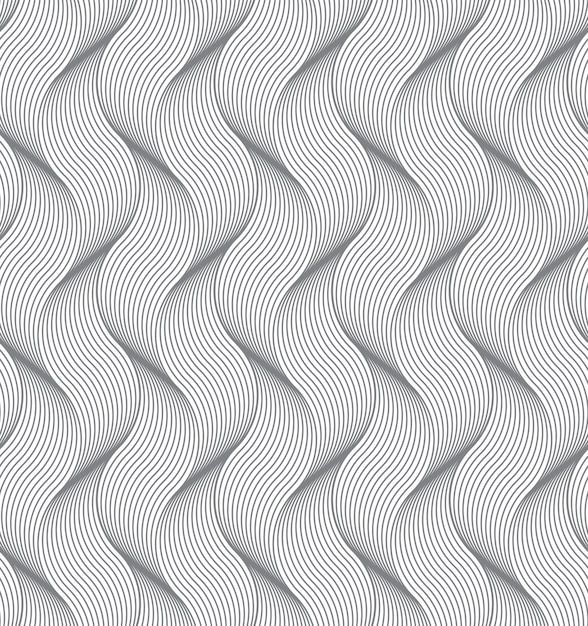
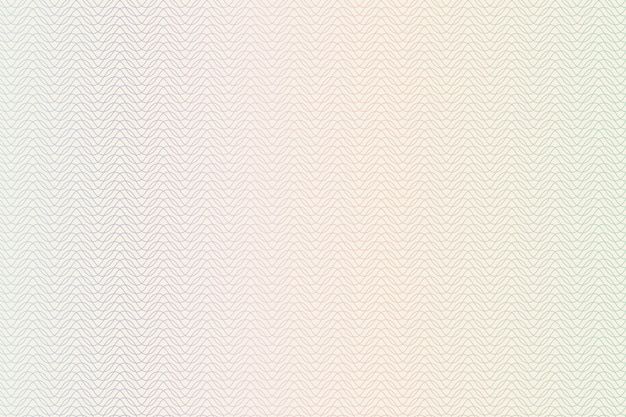
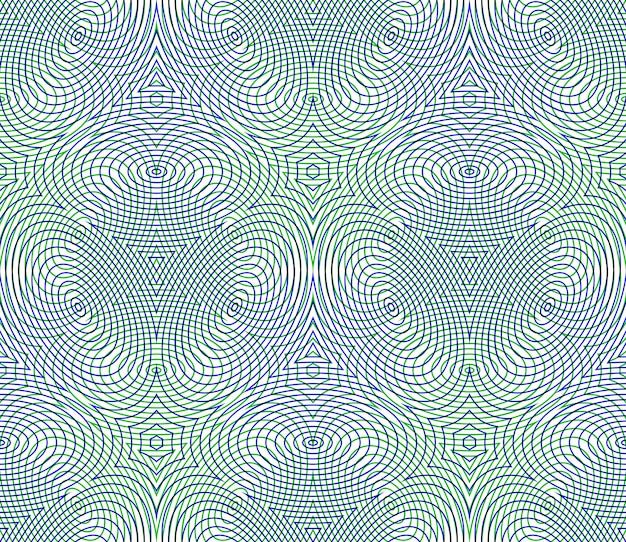
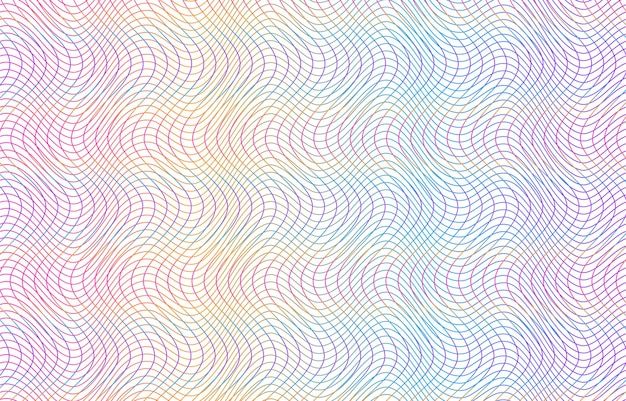
Guilloché patterns are characterised by very fine, densely packed curved lines producing a regular wave or lattice surface. When viewed close-up, individual spirals and curves are visible; at viewing distance, the pattern reads as a textured, shimmering surface with strong optical depth. When covered with translucent enamel (the Fabergé technique), the engraved ground creates an iridescent, layered visual effect. Common named guilloché surface patterns include: solar (radiating from centre), barley (wave form arranged in a grain/barley pattern), and basket weave. The pattern has zero figurative or motif content - it is entirely abstract geometry.
Guilloché is produced by the intersection and overlap of precisely controlled curved lines, creating a continuously varying but regularly repeating surface texture. The structure is determined by the mechanical parameters of the engine-turning lathe: the speed and depth of the cutting tool, the rotation of the workpiece, and the pattern cam selected. In surface design replication, guilloché is reproduced digitally using vector tools (Illustrator, parametric design software) or as a printed texture approximating the engraved surface.
In its original metalwork application, guilloché is monochromatic - the pattern is engraved into the metal surface itself (gold, silver, or silver gilt), and the tonal contrast comes from the angles of the engraved lines catching light differently. The Fabergé innovation was to apply translucent coloured enamel over the guilloché surface - the enamel adds colour while the engraved pattern beneath creates depth and shimmer. In contemporary surface design replication, guilloché is typically reproduced as a tonal print (fine lines on a slightly lighter or darker ground) to replicate the metalwork effect, or as a fine printed texture.
Engine-turning as a decorative technique dates to the 16th century, with early use on ivory and wood. The technique was adopted for metal engraving by the mid-18th century and became particularly associated with French watchmakers, clockmakers, and goldsmiths. Wedgwood produced guilloché-inspired ceramic ware around 1805. The technique reached its most famous decorative application through Peter Carl Fabergé, who from the 1880s used translucent enamel over guilloché grounds on his Imperial Easter Eggs and other luxury objects - the combination of engineered precision and translucent colour became the defining Fabergé aesthetic. In security printing, guilloché engraving has been used since the 19th century on banknotes and passports as an anti-counterfeiting measure: the dense fine-line pattern is extremely difficult to reproduce by photographic or printing methods. Watch dial guilloché remains an active category in Swiss luxury watchmaking. A guilloché-like border motif appears on an Assyrian tile dated 883-859 BC, demonstrating the independent historical emergence of interlacing spiral ornament long before mechanical engine-turning.
Guilloché (from the French, after an engraver named Guillot) refers to both a machine engraving technique and the pattern it produces.
Guilloché patterns are characterised by very fine, densely packed curved lines producing a regular wave or lattice surface. When viewed close-up, individual spirals and curves are visible; at viewing distance, the pattern reads as a textured, shimmering surface with strong optical depth.
Fundamentals
Guilloché is produced by the intersection and overlap of precisely controlled curved lines, creating a continuously varying but regularly repeating surface texture.
Geometric
In its original metalwork application, guilloché is monochromatic - the pattern is engraved into the metal surface itself (gold, silver, or silver gilt), and the tonal contrast comes from the angles of the engraved lines catching light differently.
Engine-turning as a decorative technique dates to the 16th century, with early use on ivory and wood. The technique was adopted for metal engraving by the mid-18th century and became particularly associated with French watchmakers, clockmakers, and goldsmiths.
Geometric Pattern and Art Nouveau Pattern