Loading
NEW DESIGNERS ADDED WEEKLY!
The best pattern designers.
Browse & hire professional surface pattern designers for fashion, textiles, interiors & product design.
Browse & hire professional surface pattern designers for fashion, textiles, interiors & product design.
We use cookies to improve your experience and understand how PatternDesigners is used.
Explore the worlds leading brands, studios & manufacturers that commission, license & produce surface pattern design across fashion, homeware, stationery & more.

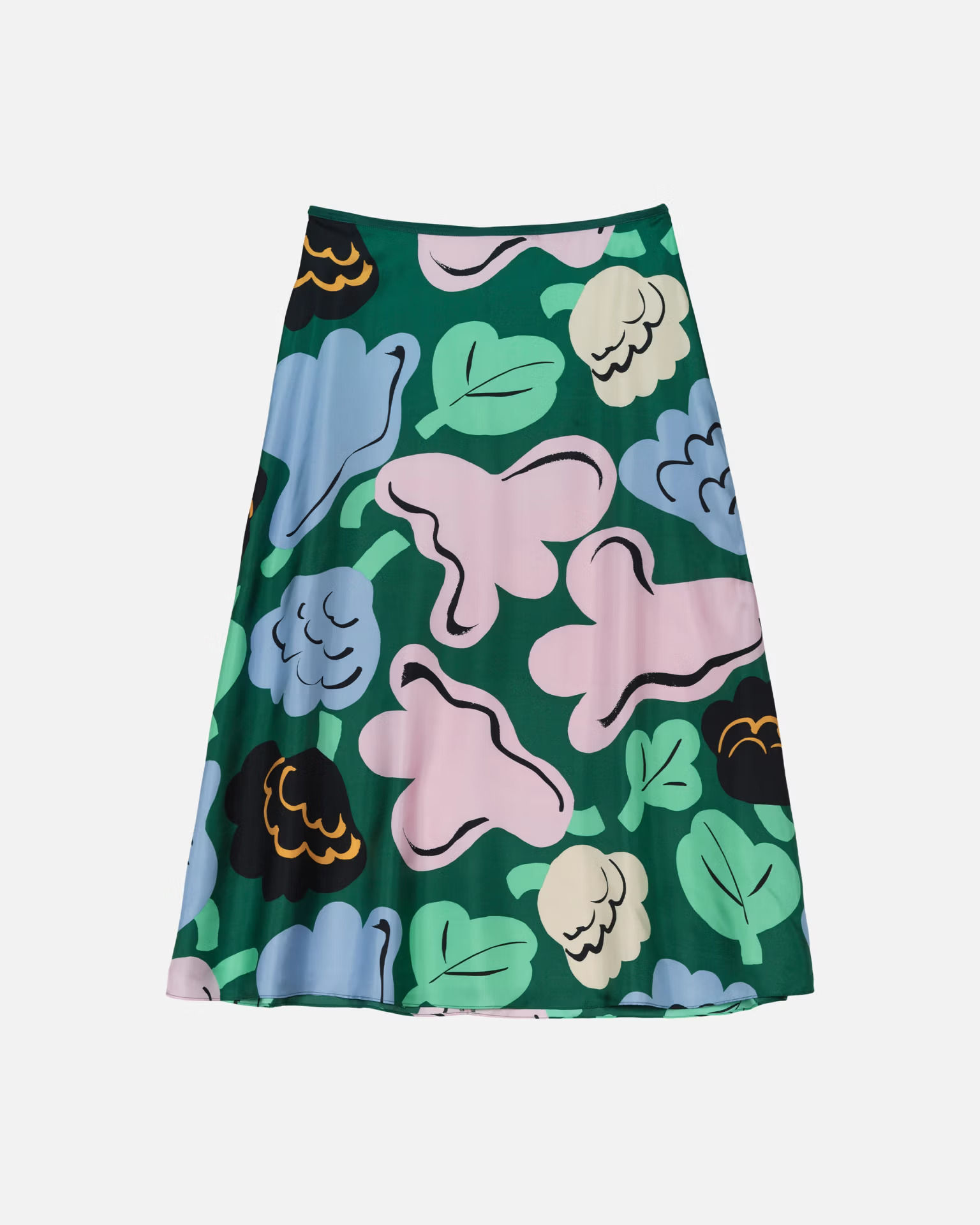
Marimekko Corporation (Finnish: Marimekko Oyj) is a Finnish textiles, clothing, and home furnishings company founded in Helsinki in 1951 by Viljo and Armi Ratia. The company was established after Viljo Ratia's oil-cloth factory project failed and was converted into a garment plant; Armi Ratia then invited artist friends to apply their graphic designs to textiles, and designed simple dresses to showcase the resulting fabrics. This print-first model - commissioning graphic designs for textiles, then building garments around the fabric - defines Marimekko's identity from its founding to the present. Marimekko is particularly noted for its brightly coloured printed fabrics and simple silhouettes, applied to both clothing and home furnishings. By 2011, the company operated 84 stores worldwide. Fabrics are printed in Marimekko's own textile printing factory in Helsinki; garment production takes place in China, India, Thailand, Portugal, Lithuania, and other countries.
Founded on the principle of bold, graphic, large-scale prints with strong chromatic contrast, applied to simple silhouettes. The foundational aesthetic established by Vuokko Nurmesniemi (geometric stripe) and Maija Isola (large-scale floral) in the 1950s-1960s defined a design DNA that persists across contemporary Marimekko collections. Garment construction is intentionally simple - the design investment is in the fabric surface, not the cut. The brand's logo itself (in use since 1954, based on Olivetti typewriter letterforms) reflects a graphic design sensibility consistent with the print direction.
Armi Ratia (1912-1979) was the creative and commercial driving force behind Marimekko's early growth. The company name derives from her middle name "Mari" combined with mekko (Finnish for dress). The Marimekko wordmark has been in use since 1954, designed by graphic designer Helge Mether-Borgström using modified versions of Olivetti typewriter letterforms - a design choice that reflects the brand's graphic design sensibility from the outset.
In the 1950s-1960s, two designers defined Marimekko's visual identity: Vuokko Nurmesniemi (the boldly striped Jokapoika shirt, 1956) and Maija Isola (the Unikko poppy print, 1964). Marimekko's presentation at the 1957 Milan Triennale - invited by Finnish industrial designer Timo Sarpaneva - brought the brand to international attention; the garments were subsequently displayed in the Rinascente department store by the store's then display manager, Giorgio Armani.
The brand expanded into the United States in the 1960s through architect Benjamin C. Thompson's Design Research stores. Future First Lady Jacqueline Kennedy purchased eight Marimekko dresses worn throughout the 1960 presidential campaign, generating significant American press coverage. By 1965, Marimekko employed over 400 staff and had extended into fabrics, toys, dinnerware, and fully furnished small houses.
After the company's 1985 sale to Amer-yhtymä (now Amer Sports) and near-bankruptcy in the early 1990s, Kirsti Paakkanen acquired Marimekko and oversaw a revival. By 2005, revenue had quadrupled and net income had grown 200-fold since her purchase. In 2007, Paakkanen began transitioning ownership to Mika Ihamuotila (CEO and largest shareholder). The company celebrated its 70th anniversary in 2021 with the publication of Marimekko: The Art of Printmaking (Thames and Hudson).
A 2013 plagiarism controversy - in which in-house designer Kristina Isola admitted copying design elements from a 1963 painting by Ukrainian folk artist Maria Prymachenko - resulted in legal action by the National Museum of Ukrainian Folk Art and the repainting of a Finnair aircraft that had been decorated with the infringing design. Additional plagiarism accusations involving Maria Jauhiainen, Markus Lepo, and Heljä Liukko-Sundström followed; five designs came under scrutiny. Marimekko's CEO later apologised for misleading consumers regarding the originality of designs in the Lepo case.
Textiles and printed fabric yardage; women's and children's clothing; bags and accessories; home furnishings (including table linens, home textiles, ceramics, and dinnerware). The company's foundational product is the printed textile bolt - garments and home goods are vehicles for displaying fabric. The Unikko poppy print and Jokapoika stripe remain in continuous production as archival designs. By 1965, the company's product scope extended to toys, dinnerware, and complete small-house furnishing. The 2021 anniversary book Marimekko: The Art of Printmaking treats the print archive as the brand's primary asset.
84 stores worldwide as of 2011, across Finland and international markets. The brand entered the US market via the Design Research stores of architect Benjamin C. Thompson in the 1960s. No outbound licensing programme is documented in the source material; Marimekko produces and retails its patterns directly through own-retail channels and selected department store distribution. The company's H&M collaboration (Spring 2008 collection) - documented in the H&M company profile - brought the Marimekko print vocabulary into mass retail for a seasonal collection. Fabrics are printed at Marimekko's own Helsinki factory, with garment production outsourced to a network of international factories.
Internationally recognised Finnish design brand. Marimekko occupies a distinct position: simultaneously a textile design company (print-first, artist-commissioned), a fashion brand (simple garment construction to showcase fabric), and a home furnishings company (table linens, home textiles). The brand's cultural cachet - built through Jacqueline Kennedy's endorsement, 1960s design movement associations, and the Sex and the City television exposure (Carrie Bradshaw wore a Marimekko bikini in season 2 and a dress in the same season; tablecloths featuring Marimekko prints appeared in season 5) - makes it one of the most recognised Finnish brands globally. The brand's association with Scandinavian functional design and bold graphic print has remained consistent across ownership changes.
Marimekko is founded entirely on surface pattern design. The company's founding model - inviting artists to apply graphic designs to textile yardage, then constructing simple garments to showcase the resulting fabric - is the purest documented example of a print-first commercial textile company in the 20th century.
Core pattern archive:
Design commissioning model: From its 1951 founding, Marimekko commissioned independent artists and graphic designers to create textile patterns. Armi Ratia's founding act was specifically to invite "artist friends to apply their graphic designs to textiles." The resulting patterns were the primary commercial product; garments were secondary. This model established a precedent for art-directed textile print as the core design discipline of the company.
Artist-designed patterns across categories: The print vocabulary extends from fashion garments to table linens, upholstery, bags, ceramics, and home textiles - demonstrating that the surface patterns function independently of their substrate and are applied across product categories.
Print factory ownership: Marimekko owns its textile printing factory in Helsinki, where fabrics are printed in-house. This direct control over the printing process is a documented operational commitment to surface pattern quality and consistency.
Plagiarism scrutiny (2013): The 2013 controversy - in which Kristina Isola admitted copying elements from Maria Prymachenko's 1963 folk art painting - confirms the commercial and legal significance attached to Marimekko's pattern originality claims, and demonstrates the legal enforceability of textile pattern copyright in the Finnish and international market context.
Marimekko Corporation (Finnish: Marimekko Oyj) is a Finnish textiles, clothing, and home furnishings company founded in Helsinki in 1951 by Viljo and Armi Ratia.
Marimekko is founded entirely on surface pattern design. The company's founding model - inviting artists to apply graphic designs to textile yardage, then constructing simple garments to showcase the resulting fabric - is the purest documented example of a print-first commercial textile company in the 20th century.
Textiles and printed fabric yardage; women's and children's clothing; bags and accessories; home furnishings (including table linens, home textiles, ceramics, and dinnerware). The company's foundational product is the printed textile bolt - garments and home goods are vehicles for displaying fabric.
Internationally recognised Finnish design brand. Marimekko occupies a distinct position: simultaneously a textile design company (print-first, artist-commissioned), a fashion brand (simple garment construction to showcase fabric), and a home furnishings company (table linens, home textiles).
84 stores worldwide as of 2011, across Finland and international markets. The brand entered the US market via the Design Research stores of architect Benjamin C. Thompson in the 1960s.
Armi Ratia (1912-1979) was the creative and commercial driving force behind Marimekko's early growth. The company name derives from her middle name "Mari" combined with mekko (Finnish for dress).
Finland