We use cookies to improve your experience and understand how PatternDesigners is used.
St. John is an American luxury fashion brand founded in 1962 by Marie St John - a model who hand-knit straight skirts and matching tops for her own use, found demand among fellow models, and with her husband Robert Gray secured an initial order of 84 dresses from Los Angeles retailer Bullock's. The brand built its reputation on a proprietary tightly woven wool and rayon double knit fabric developed by Marie St John in 1962, identifiable by its knit-in hem (as opposed to standard sewn-in hems). Collections grew to include tailored suits, dresses, Chanel-inspired jackets, and casual sportswear in a palette emphasising primary colours. The company went through a sequence of ownership changes - Escada purchased 80% for $45 million in 1990; a private equity acquisition removed the founding Gray family in 2005 (before they were recalled as creative consultants in 2007); Fosun International acquired a 30% stake in 2013 and a majority stake in 2017. Since 2022, St. John has been part of the Lanvin Group and listed on the NYSE via a SPAC merger. The brand is headquartered in Anaheim, California, with 27 company-owned boutiques in the US and distribution across specialty stores in 29 countries.
Creative directors have included Zoe Turner (2019-2023; previously Christian Dior Couture, Alberta Ferretti, Max Mara), who revitalised the brand through younger silhouettes and red carpet celebrity dressing - placing the brand on Gigi Hadid, Zendaya, Lupita Nyong'o, Alicia Keys, and Sarah Jessica Parker. Her successor Enrico Chiarparin (2023-) works closely with star stylist Karla Welch and brings experience from Calvin Klein, James Perse, and Miu Miu. The brand's founding creative DNA was established by Marie St John, whose classically conservative design vision (investment knitwear in primary colour, clean silhouettes, quality construction) defined St. John's market identity for its first four decades. Current direction appears to maintain heritage knitwear credibility while targeting a broader fashion-editorial positioning.
Core knitwear - classic wool and rayon double knit fabrication; the brand's founding and defining product; the proprietary knit-in hem (rather than sewn-in hem) is a signature technical mark of authenticity; the tightly woven double knit fabric developed by Marie St John in 1962 remains the commercial foundation of the brand
Tailored suits and jackets - Chanel-inspired bouclé-style jacket and coordinating trouser or skirt; the iconic product type for the brand's aspirational workwear market; drives the brand's "status symbol" reputation
Dresses - evening and occasion dressing; relaunched as a red carpet category under Zoe Turner's tenure
Sportswear / St. John Sport - the St. John Sport sub-line contains "more on-trend styles" (Wikipedia source); positioned as a more accessible entry point within the brand
Accessories and watches - documented in retail categories; complete the brand's full-wardrobe proposition
St. John distributes through 27 company-owned retail boutiques in the United States and specialty stores in 29 countries. The brand's historical retail relationships - with Jacobson's and Lord & Taylor (now both defunct) - were described as foundational to its commercial growth for decades. The brand is now part of the Lanvin Group, a Chinese-backed multi-brand luxury holding company (Fosun International / Lanvin Group subsidiary) listed on the NYSE via SPAC merger in 2022. No licensing programme is documented in the source.
St. John occupies the American luxury women's ready-to-wear segment, positioned as a heritage status brand for professional and affluent women. Its reputation was built on the concept of investment dressing - "For ladies who lunch, a St. John knit is almost like a uniform, a status symbol" (retail consultant quoted in International Directory of Company Histories, 1996). The brand cultivated decades of loyalty through large established retailers (Jacobson's, Lord & Taylor) before developing its own boutique network. Under Zoe Turner (2019-2023) and then Enrico Chiarparin (2023-), the brand has pursued a younger, more contemporary positioning through celebrity dressing and editorial fashion - a recalibration from its historical core of conservative workwear luxury. The Lanvin Group / Fosun International ownership situates St. John within a broader Chinese-owned multi-brand luxury portfolio alongside Lanvin, Wolford, Sergio Rossi, and others.
St. John's SPD relevance is concentrated in knitwear surface construction and the role of colour, texture, and fabric structure as the brand's primary design language.
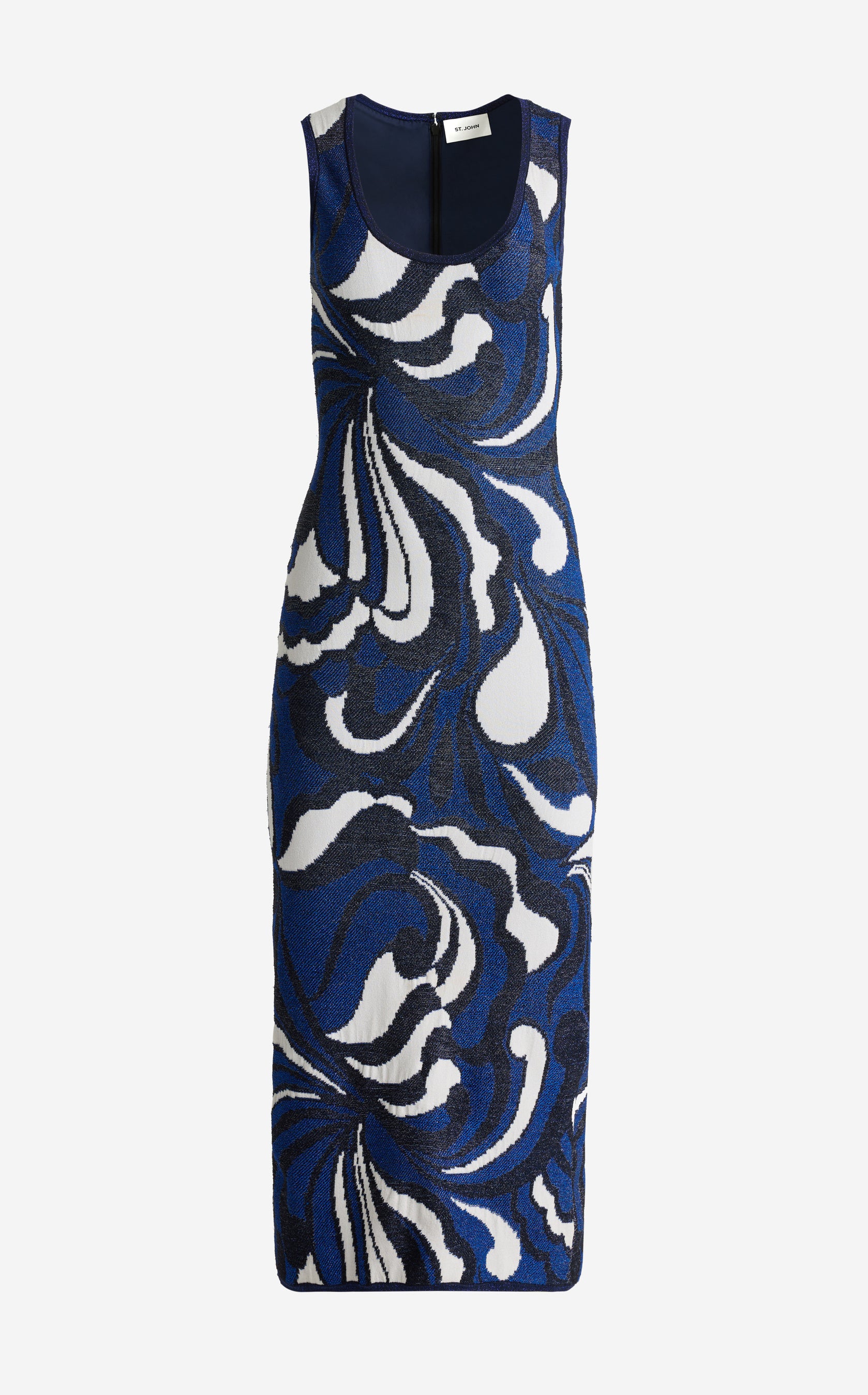
Double knit as surface design - St. John's founding product is a proprietary tightly woven wool and rayon double knit fabric. Double knit is itself a surface structure: the fabric's texture, drape, weight, and visual character are determined by the yarn composition, stitch structure, tension, and finishing - design decisions directly analogous to surface pattern design but operating in the third dimension of textile construction rather than print application. Marie St John's 1962 development of the specific St. John double knit is the brand's most distinctive technical surface contribution.
Colour as brand identity - the brand's "extensive use of primary colours" is documented as a defining characteristic. At the luxury knitwear market level, seasonal colour direction is a primary design differentiator - the colour palette applied to a collection of knit coordinates is both a surface design decision (which tones appear in which combinations, across what forms) and a commercial brand signal.
Chanel-inspired jackets - the Chanel bouclé jacket silhouette, which St. John references, is itself a surface design object: the bouclé or looped-yarn weave structure of the fabric is its defining surface characteristic. St. John's iteration of this format involves its proprietary knit construction rather than woven bouclé, but the design intent - producing a luxury tailored jacket in a textured knit surface - places fabric surface design at the centre of the product's value proposition.
Knitwear coordinate system - St. John's collections are structured around coordinated knit pieces (jacket, skirt, trouser, top) that are designed to work together through consistent colour, texture, and pattern within each seasonal grouping. This coordinate system is a form of applied textile design where the surface consistency of the knitwear programme is the commercial proposition.
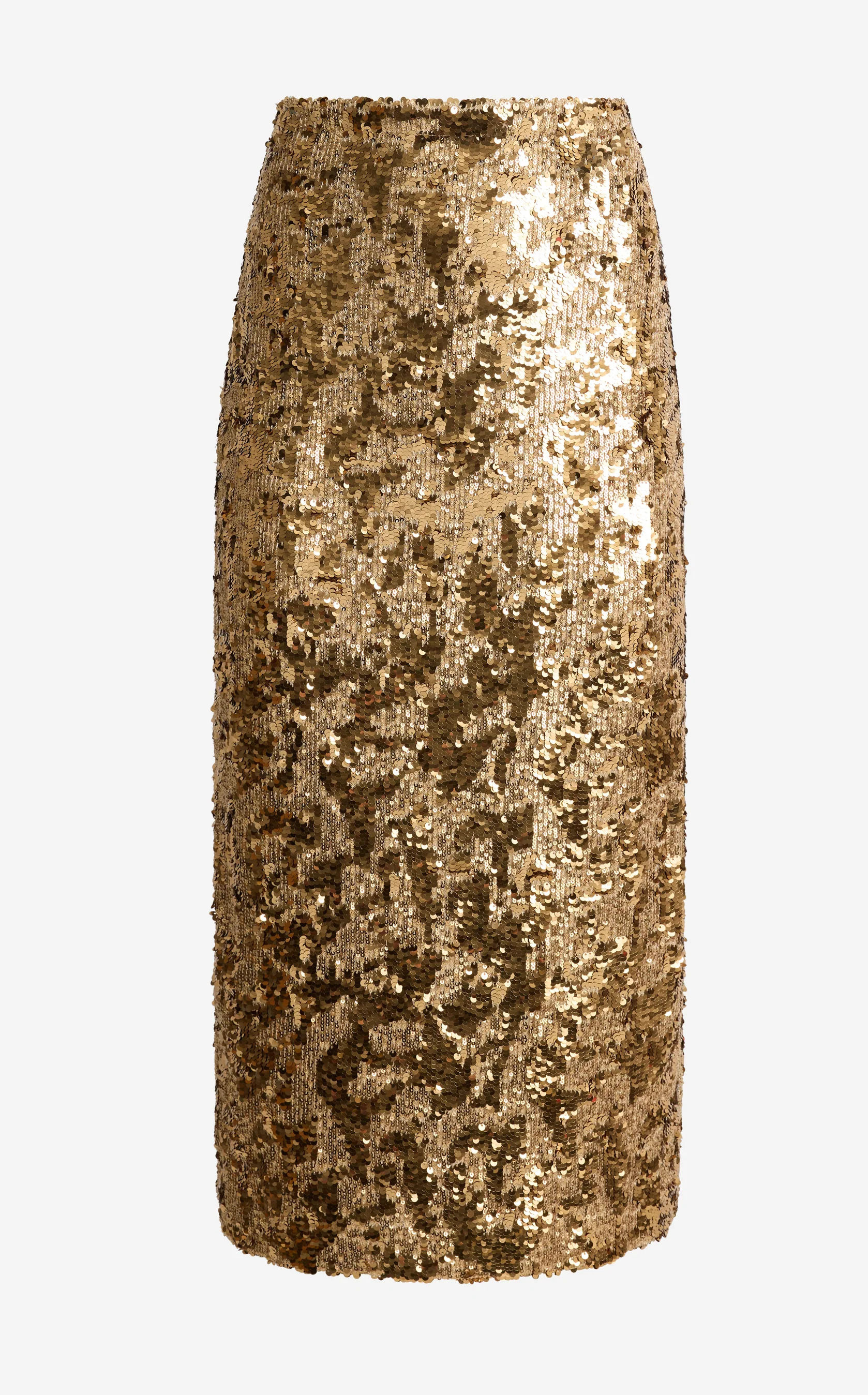
Red carpet and occasion knitwear - under Zoe Turner's creative direction, evening dressing and occasion gowns were developed in St. John's knit vocabulary. Occasion knitwear requires surface design decisions around texture, applied embellishment, and structural surface effects (tucking, shirring, intarsia pattern) that extend beyond daywear knit conventions.
St. John is an American luxury fashion brand founded in 1962 by Marie St John - a model who hand-knit straight skirts and matching tops for her own use, found demand among fellow models, and with her husband Robert Gray secured an initial order of 84 dresses from Los Angeles retailer Bullock's.
St. John's SPD relevance is concentrated in knitwear surface construction and the role of colour, texture, and fabric structure as the brand's primary design language. Double knit as surface design - St. John's founding product is a proprietary tightly woven wool and rayon double knit fabric.
St. John occupies the American luxury women's ready-to-wear segment, positioned as a heritage status brand for professional and affluent women. Its reputation was built on the concept of investment dressing - "For ladies who lunch, a St.
St. John distributes through 27 company-owned retail boutiques in the United States and specialty stores in 29 countries. The brand's historical retail relationships - with Jacobson's and Lord & Taylor (now both defunct) - were described as foundational to its commercial growth for decades.
1962: Marie St John and Robert Gray found St. John in Irvine, California; first order of 84 dresses from Bullock's; Marie designs and oversees production; Gray handles marketing and sales 1990: Escada (founded by Margaretha and Wolfgang Ley) purchases 80% stake for $45 million; St.
United States