Loading
NEW DESIGNERS ADDED WEEKLY!
The best pattern designers.
Browse & hire professional surface pattern designers for fashion, textiles, interiors & product design.
Browse & hire professional surface pattern designers for fashion, textiles, interiors & product design.
We use cookies to improve your experience and understand how PatternDesigners is used.
Discover pattern styles, motifs & structures used throughout surface pattern design, with visual examples to help you recognise every pattern type.

Sky patterns draw on the day and night sky as their primary design source, incorporating cloud formations, stars, celestial bodies, and constellation arrangements as repeating motifs. As a category, sky patterns span a wide tonal and stylistic range: soft pastel daytime cloud compositions for nursery textiles, midnight-blue constellation charts for adult wallpaper, and golden celestial symbols for fashion accessory prints. The astronomical framework of constellations - both the 88 officially recognised IAU groupings and informal asterisms - provides a named and historically grounded motif vocabulary that lends sky patterns an educational and heritage dimension beyond purely decorative use.
Sky patterns draw on the day and night sky as their primary design source, incorporating cloud formations, stars, celestial bodies, and constellation arrangements as repeating motifs. As a category, sky patterns span a wide tonal and stylistic range: soft pastel daytime cloud compositions for nursery textiles, midnight-blue constellation charts for adult wallpaper, and golden celestial symbols for fashion accessory prints. The astronomical framework of constellations - both the 88 officially recognised IAU groupings and informal asterisms - provides a named and historically grounded motif vocabulary that lends sky patterns an educational and heritage dimension beyond purely decorative use.
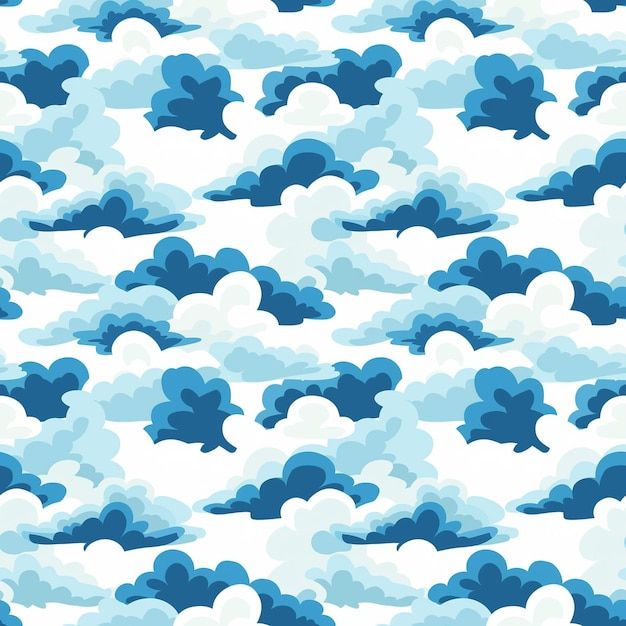
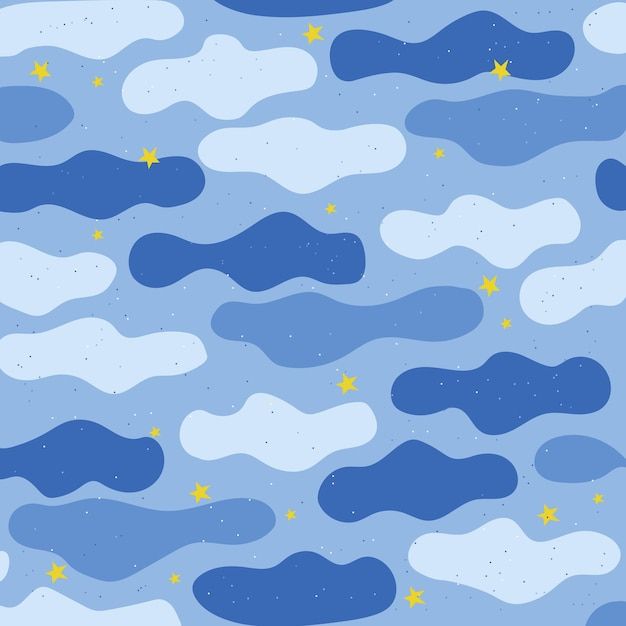
Daytime sky patterns use fluffy white or pastel cloud forms - cumulus rounded shapes are the most common - on blue or gradient sky grounds, sometimes with a sun, birds, or rainbow elements. Night sky patterns use dark backgrounds with white or gold star points, crescent or full moon forms, and optionally constellation line drawings connecting named star groups. Zodiac-constellation versions present the 12 ecliptic constellations (Aries, Taurus, Gemini, Leo etc.) as both symbolic and astronomical drawings. Meteorological cloud category illustrations (cirrus, cumulus, stratus) provide a more technically precise vocabulary used in educational and naturalistic design contexts.
Tossed repeats are most common, with cloud forms, stars, and celestial elements scattered loosely across the surface. Constellation-based designs may use more structured layouts, mapping star positions into semi-regular compositional grids. Placement prints featuring single constellation line drawings or a central sun/moon motif are used in fashion apparel and accessories.
Daytime versions: soft blues, white, pale yellow, and pastel multi-colour (rainbow associations). Night sky versions: deep navy, near-black, or dark violet grounds with white, gold, or silver motifs. Celestial symbol versions (sun/moon/star as decorative motif rather than naturalistic element) often use gold, cream, or monochrome palettes - associated with mystical or spiritual aesthetics as well as heritage textile traditions. Children's variants use softer pastels and simplified forms; adult and fashion variants use more sophisticated linework or abstracted constellation geometry.
Sky and celestial imagery has a long history in decorative arts across cultures. Constellations as named pattern groups have been documented across many ancient civilisations for navigation, agricultural timing, and storytelling. The International Astronomical Union now recognises 88 official constellations dividing the entire celestial sphere; the 12 zodiac constellations (those along the ecliptic) are among the most widely recognised and have been used in decorative arts for centuries. Asterisms - informal star patterns recognised within or across constellations, such as the Big Dipper within Ursa Major, or the Summer Triangle spanning Cygnus, Aquila, and Lyra - provide additional named motif vocabulary.
In contemporary surface pattern design, celestial and sky themes have sustained commercial relevance as a versatile category with broad demographic appeal - from nursery cloudscapes to adult mysticism-adjacent star charts.
Sky patterns draw on the day and night sky as their primary design source, incorporating cloud formations, stars, celestial bodies, and constellation arrangements as repeating motifs.
Daytime sky patterns use fluffy white or pastel cloud forms - cumulus rounded shapes are the most common - on blue or gradient sky grounds, sometimes with a sun, birds, or rainbow elements.
Nature
Tossed repeats are most common, with cloud forms, stars, and celestial elements scattered loosely across the surface. Constellation-based designs may use more structured layouts, mapping star positions into semi-regular compositional grids.
Celestial
Daytime versions: soft blues, white, pale yellow, and pastel multi-colour (rainbow associations). Night sky versions: deep navy, near-black, or dark violet grounds with white, gold, or silver motifs.
Sky and celestial imagery has a long history in decorative arts across cultures. Constellations as named pattern groups have been documented across many ancient civilisations for navigation, agricultural timing, and storytelling.
Space Pattern and Star Pattern