Loading
NEW DESIGNERS ADDED WEEKLY!
The best pattern designers.
Browse & hire professional surface pattern designers for fashion, textiles, interiors & product design.
Browse & hire professional surface pattern designers for fashion, textiles, interiors & product design.
We use cookies to improve your experience and understand how PatternDesigners is used.
Discover pattern styles, motifs & structures used throughout surface pattern design, with visual examples to help you recognise every pattern type.

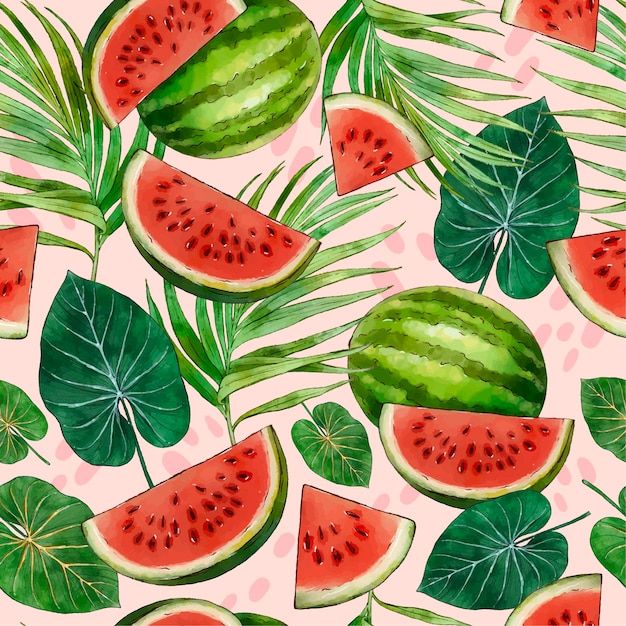
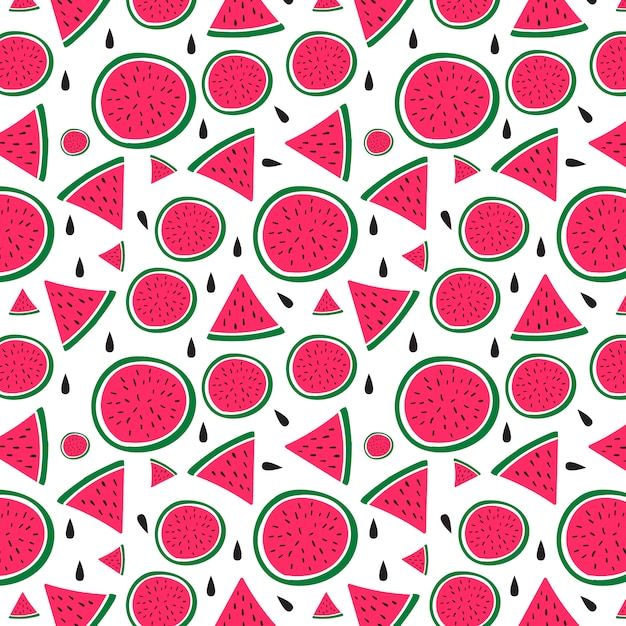
The watermelon pattern draws on the fruit's distinctive visual properties for decorative surface design. It is a subcategory of fruit and food-themed novelty print, with particular commercial resonance in summer-season products. Designs range from flat geometric simplifications of the fruit's cross-section to detailed illustrative compositions incorporating whole fruit, slices, rinds, seeds, and vines.
The watermelon pattern draws on the fruit's distinctive visual properties for decorative surface design. It is a subcategory of fruit and food-themed novelty print, with particular commercial resonance in summer-season products. Designs range from flat geometric simplifications of the fruit's cross-section to detailed illustrative compositions incorporating whole fruit, slices, rinds, seeds, and vines.
The central visual reference is the sliced watermelon: a triangular or semicircular cross-section revealing a field of red or pink flesh dotted with black seeds, bordered by the pale inner rind and dark-to-light green outer rind. Rind-only patterns use the exterior striping - alternating dark and pale green - as a repeating band or background element. Seed arrangements can be scattered or organised into spiral or grid compositions. More complex designs combine multiple cut angles with whole fruits, rind fragments, and leaf or vine motifs.
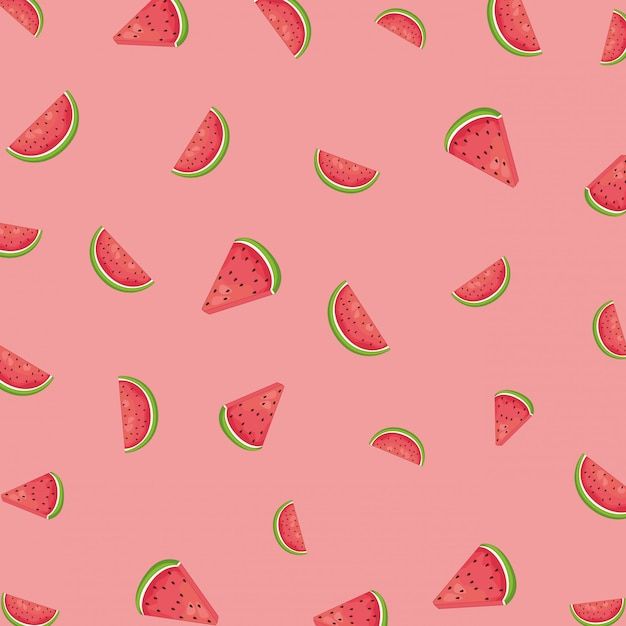
Watermelon patterns are most commonly executed as tossed (random) repeats, with slices, seeds, and rind elements scattered across the surface. Half-drop and full-drop arrangements are also used, particularly for simpler designs built from a single repeated slice motif. Geometric versions may be based on triangle or semicircle grids. Pixel and mosaic interpretations abstract the motif into repeat units of colour rather than representational form.
The canonical palette is red or deep pink flesh, black seeds, pale cream or white inner rind, and alternating dark green/light green outer rind. Summery and high-contrast. Contemporary variants include pastel or neon recolouring, monochrome, and white-on-green linework. The geometric version tends toward flat bold primary colours; the illustrated version allows more gradient and texture.
As a consumer design motif, the watermelon print belongs to the broader mid-20th century tradition of novelty kitchen and summer textiles that used food imagery on household linens and aprons. It resurfaced as a prominent seasonal commercial motif from the 2000s onwards, driven by print-on-demand platforms, stationery brands, and resort wear. The watermelon emoji (🍉) also carries cultural and political significance as a symbol of Palestinian solidarity, which has influenced the motif's broader visibility in digital culture from the 2010s.
The watermelon pattern draws on the fruit's distinctive visual properties for decorative surface design. It is a subcategory of fruit and food-themed novelty print, with particular commercial resonance in summer-season products.
The central visual reference is the sliced watermelon: a triangular or semicircular cross-section revealing a field of red or pink flesh dotted with black seeds, bordered by the pale inner rind and dark-to-light green outer rind.
Apparel: summer tops, swimwear, resort wear, children's clothing Home textiles: tea towels, napkins, tablecloths, beach towels Stationery: notebooks, wrapping paper, gift bags Homeware: mugs, plates, trays Print-on-demand: fabric yardage, wall art, accessories Wallpaper: children's rooms, kitchen feature walls
Watermelon patterns are most commonly executed as tossed (random) repeats, with slices, seeds, and rind elements scattered across the surface. Half-drop and full-drop arrangements are also used, particularly for simpler designs built from a single repeated slice motif.
Cross-section slice (triangle or semicircle) showing flesh and seeds Whole watermelon fruit (round or oval) Rind fragments (green stripe sections) Scattered black seeds Botanical elements: vines, tendrils, leaves Pixel/mosaic abstracted watermelon forms
The canonical palette is red or deep pink flesh, black seeds, pale cream or white inner rind, and alternating dark green/light green outer rind. Summery and high-contrast. Contemporary variants include pastel or neon recolouring, monochrome, and white-on-green linework.
As a consumer design motif, the watermelon print belongs to the broader mid-20th century tradition of novelty kitchen and summer textiles that used food imagery on household linens and aprons.
Fruit Pattern, Lemon Pattern, Pineapple Pattern, and Banana Pattern